





Thank you dear subscribers, we are overwhelmed with your response.
Your Turn is a unique section from ThePrint featuring points of view from its subscribers. If you are a subscriber, have a point of view, please send it to us. If not, do subscribe here: https://theprint.in/
We often hear that neonicotinoids are the new DDT killing the natural world. PNAS and other research have raised concerns about their impact on the food webs.
The clever marketing hid a dangerous truth: Seed coatings were made with neonicotinoid systemic insecticides that can end up in food when that moves from the seed coat into the seedling and then moves throughout the plant. What the big chemical companies were selling were pesticides that made the whole plant toxic to pests, including the part we eat. Behind closed doors, chemical companies knew of the toxic risks long before the public did. The pesticide industry often calls seed treatment environmentally beneficial because it reduces the amount of insecticide application. But reality is quite the contrary. Advice comes from representatives of companies to spray organophosphates [such as chlorpyrifos] repeatedly in greater amounts. And farmers often still had to spray multiple times in a season. When it comes to healthy eating, fruits and vegetables reign supreme. But along with all their vitamins, minerals and other nutrients can come something else: an unhealthy dose of dangerous pesticides. Pesticides sprayed on fruits and vegetables accumulate on the outer peel or skin, but the skin does not form an impermeable barrier. Even then, washing everything you bring home may not remove pesticides residues that had penetrated deep into the peel or through the peel to the flesh of the fruit.
Chlorpyrifos is among the most commonly used pesticides. Its residues are often present in fruits, vegetables. A commonly-used pesticide could be responsible obesity epidemic. News surrounding the health risks of calcium carbide (CaC2) is not new. The use of calcium carbide (CaC2) for the artificial ripening of fruits is a common practice. Bananas are the most important food crop usually ripened with calcium carbide (CaC2).
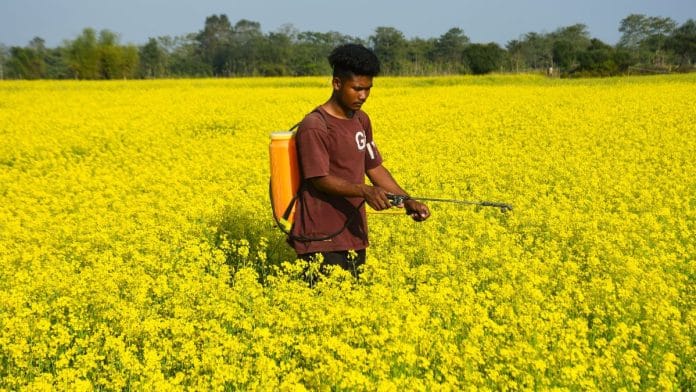
What about the “pesticides are safe and necessary” myth? That is just another marketing masterpiece. Chemical companies arguments, that pesticides are safe when used correctly. Farmers exposed on the job. It’s a moral equation, not just a regulatory one. An average of about 200,000 people die from toxic exposure of pesticides per year across the world, the United Nations says, calling for tougher global regulations of substances meant to control pests or weeds for plant cultivation. UN human rights council expressed concern about pesticide “catastrophic impacts” on human health and the environment.
Farmers tell themselves that if they use pesticides at the authorized doses, there are no risks. And so this belief instilled by the pesticide industries in the farming community has percolated very well. As a result, farmers think less about protecting themselves, because they’re led to believe that if they use pesticides properly, they’ll be fine.
Decades of using synthetic pesticides as the first and only line of defense mean that older, traditional knowledge and skills about pest and weed management have been lost. Pesticide companies are not encouraging growers to adopt Integrated Pest Management (IPM) because they do not seem to find profit in it, otherwise they would be encouraging growers to adopt IPM, which is proven to steward insecticides, minimize environmental risk from insecticides, and improve profits by decreasing input costs.
Farmers as a whole will be better off: healthier, safer and perhaps even more skilled at natural farming.
These pieces are being published as they have been received – they have not been edited/fact-checked by ThePrint.