





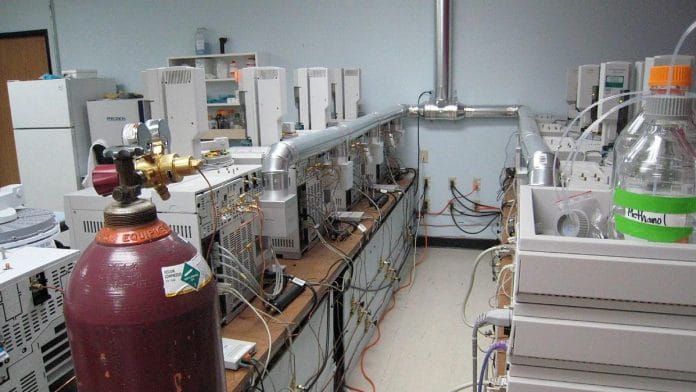



New Delhi: In a 23 July report headlined ‘Substandard equipment, no repair’ — Modi govt’s ‘Buy Indian’ credo has scientists exasperated’, Abantika Ghosh quoted several Indian scientists as seeking easier procurement norms for scientific equipment.
The primary issues flagged by the scientists were what they described as lack of quality control in the Government e-Marketplace (GeM), the need for precision in scientific equipment, and the inordinate delays that mark procurement of even proprietary items.
ThePrint had reached the GeM via email for a comment on the concerns, but no response was received by the time of publishing the report. An email to the expenditure department in the Ministry of Finance, which monitors transactions under the GeM, did not elicit a comment either.
In response to this report, P. Sriram of IIT Madras has written to ThePrint, citing some objections he had with its content. His response is reproduced below with minor edits.
“I write this in response to a recent article bylined Abantika Ghosh.
“The article is on the general topic of recent changes in procurement rules of the central government oriented towards ‘Make in India’. I can comment with some authority on the subject as former academic department head, dean and registrar at IIT Madras. Let me respond to multiple issues in the article as follows.
“First, about GeM. Yes, GeM portal is not the most user-friendly, there is a steep learning curve etc. It is perhaps still a work in progress, but is certainly usable. As per Finance Ministry documents (which are mostly implemented directly in GeM, by the way), for items costing below Rs 5 lakh, one can just order ‘off the shelf’ on GeM, no tendering is required.
“One can certainly procure branded products like Dell or HP. It is an irony that these two brands are named in the article — not just desktop computers, but both these brands have plants in India churning out higher configuration products and with local content declared at the lower tier (20-50 per cent). If one does not know how to make use of this provision, that would indicate an institutional level issue and not a policy level one. IIT Madras is procuring computers and others items regularly on GeM — about 100 orders with aggregate value around Rs 1 crore every month.
“I don’t believe that is indicative of something that is not usable. There is also mention of unknown quality of items procured on GeM. This is an issue with all online ordering, including, say, Amazon. One has to do due diligence just like one would do on Amazon — see user feedback on past orders serviced by the vendor etc. GeM does make this information available; there is also a vendor-event reporting system on GeM where history of past complaints against vendors can be checked. If the rate of complaints is high, GeM does have a system of weeding out vendors, but detailed information on that will have to be obtained from GeM.
“A second issue that is raised is about the need to get waiver for floating global tenders. There is a fairly well-specified process with quarterly schedule as has been correctly pointed out in the article. Given the quarterly schedule, why something would take two years to get approved (as mentioned in the article) is not clear, unless one is not following the procedure to obtain the global tender waiver or whatever else approval is sought. IIT Madras has been regularly filing global tender exemption requests and in the last one and a half years (since the process was streamlined to quarterly-ministry-level approval instead of cabinet-secretariat-level approval), IIT Madras has filed and received over 250 global tender waivers with estimated total value of over Rs 200 crore.
“Although the ministry guidelines mention a quarterly schedule (and we are filing 30-40 waiver requests every quarter), our experience as verified with some other IITs also is that if there is sufficient volume of requests, it gets processed upon submission without referral to the quarterly schedule, usually with approvals being received in 2-3 weeks.
“There is yet another issue mentioned in the article about poor quality of items supplied by local and other unknown vendors. There is always a simple solution to protect against this and this is anyway not something related to any new ‘Make in India’ regulations. For ten years or maybe even more, the market has been flooded with cheaper made-in-China scientific instruments, some of which are of good quality while some of which are not of acceptable quality. The simple way to safeguard against this is to incorporate a tender condition of referral to recent past customers.
“If some end user has been supplied with an instrument that does not meet the required performance specification, such end user is usually more than willing to share the negative feedback with other potential customers and such below par products can be accordingly disqualified from consideration. There is a mention in the article about NSF certification of equipment — it is not clear what stops the user from specifying this as one of the requirements — unless the certification is very specific and will have the effect of automatically disqualifying any India-based vendor.
“There are also India-centric certifications like BIS but applicability varies from field to field and the end-user scientist has to make a prudent decision as to what certification is appropriate. Yes, this will take some effort. If scientists cannot be bothered to carry out such due-diligence checks while spending taxpayer money, well, one really should question whether the taxpayer should be funding such scientists. I am a taxpayer too and I believe I have the right to ask this of scientists.
Thanks for your attention.
Prof. P. Sriram
IIT Madras”