





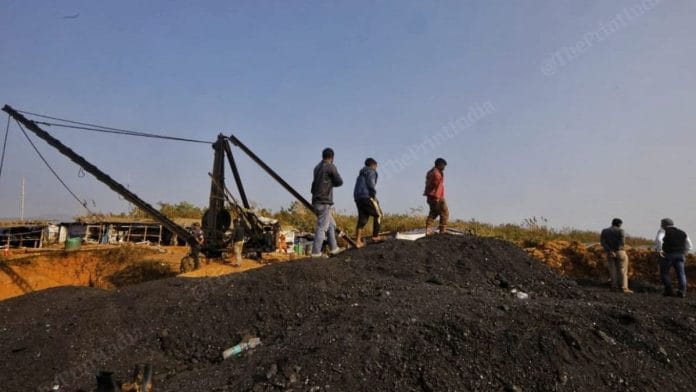



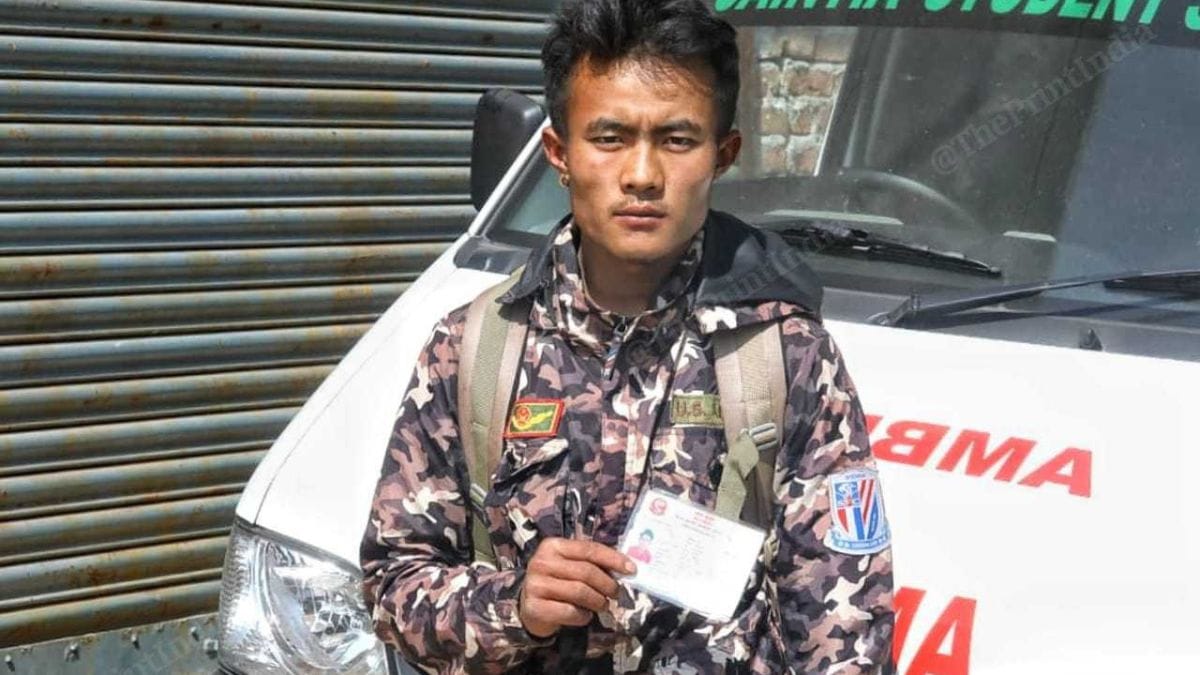
Thanksgo: Boomi Raj Rai traveled 24 hours by car, with more hope than money in his pocket, looking to take his brother’s body home to Nepal. But even after visiting two hospitals and talking to officials, he hasn’t found his brother. Boomi has accepted that his brother is dead, but he wants to carry out the last rites in his village.
Boomi Raj’s brother Kaviraj Rai was among the 27 who died in an illegal coal mine blast in Meghalaya’s Thanksgo region in East Jaintia Hills on 5 February. Nine labourers are in hospital with injuries.
“I got a phone call from a relative about this blast and started my travel here. I heard about compensation, but I haven’t found the body yet and there is no system for giving compensation to Nepalis,” said Rai, his brother’s identity card in hand.
The district police have started an operation and seized some explosives and arrested two people, but mine labourers and locals say the illegal mining was an open secret.
“How is this illegal? Illegal is something that police say is not correct. But thousands of people work here in these mines and police is aware, politicians are aware, so we don’t consider it illegal,” one mine labourer told ThePrint.
Even though rat hole mining was banned by the Supreme Court in 2014, operations have continued, with mine contractors employing those from very poor backgrounds. Now the Meghalaya High Court has asked for a report from the district on this tragedy.
The Meghalaya government and Prime Minister Narendra Modi have announced Rs 3 lakh and Rs 2 lakh compensation respectively for those who died in the state’s East Jaintia Hills site. But most victims were Nepalese nationals, and the rules on compensation for them are not clear. While many families have travelled from Nepal, the administration hasn’t found a way to help them yet.
“We are distributing the compensation. I have to ask my seniors about the Nepal nationals as it will have more legalities and the embassy will be involved. As of now we are processing the state government compensation and PM Modi compensation will also start,” said District Collector Manish Kumar.
‘No money for medicines’
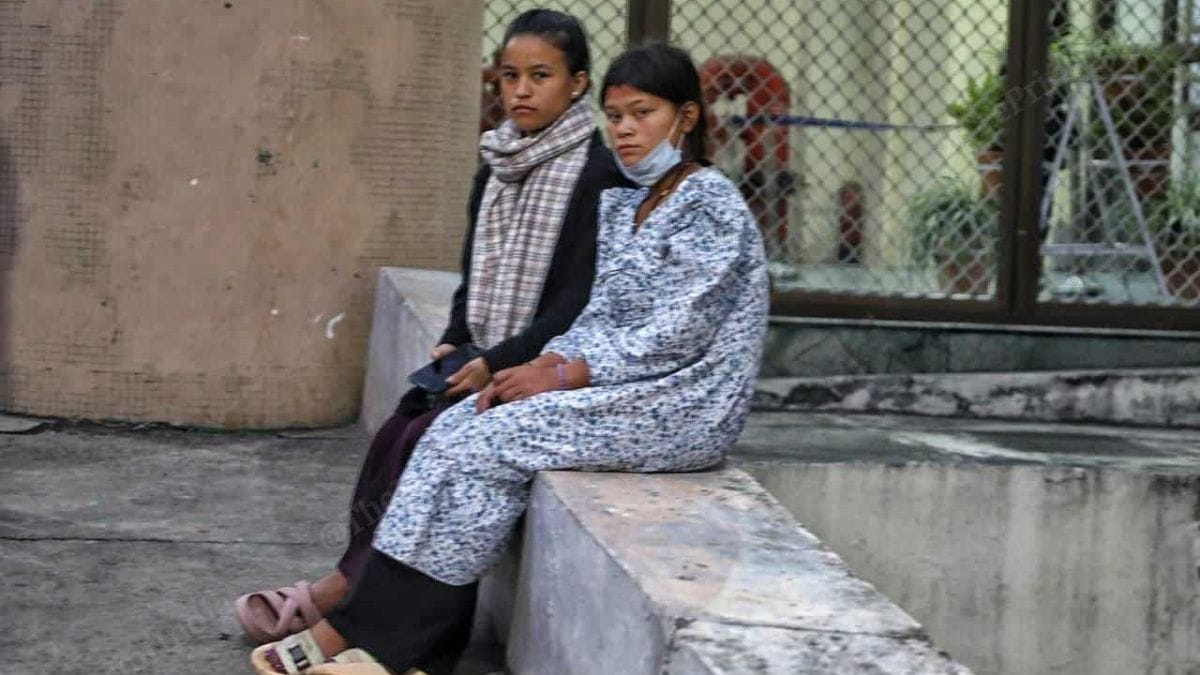
Twenty-year-old Sanjana has been at Shillong’s NIGRIM Hospital for the last four days, praying for her husband who suffered upper body injuries in the blast. In fact, she had to take him to hospital herself in a coal truck, with help from other labourers. She has no money, no mobile phone and no relative who can help her.
“I don’t have any money. The doctor asked me to buy some medicines, I had to borrow money from this ‘sister’. It was Rs 2,000 but how long will she help me?” said Sanjana while holding the hands of a local woman who helped her.
Sanjana’s husband Deb was working in the rat-hole mine for the last six years, off and on. The day of the blast, he was unwell, but the contractor insisted he go to work. “He told me he did not want to go to work but had to,” recalled Sanjana.
Blasting is a normal process during mining, but Sanjana, who lives barely 50 metres from the mine entrance, said she had never heard a blast so loud.
“My food fell out of my hand, the fire was so high, the stones kept falling. It took us more than two minutes to go out of our hut. I saw headless bodies come out of the mine. It was horrible. I was just shouting my husband’s name,” she said.
So far, she said, she has got no official help. Her husband is from Tripura but she doesn’t have any document to give the officials.
“I called his home but they are not helping us. I really want help. I just want him to be okay,” she said.
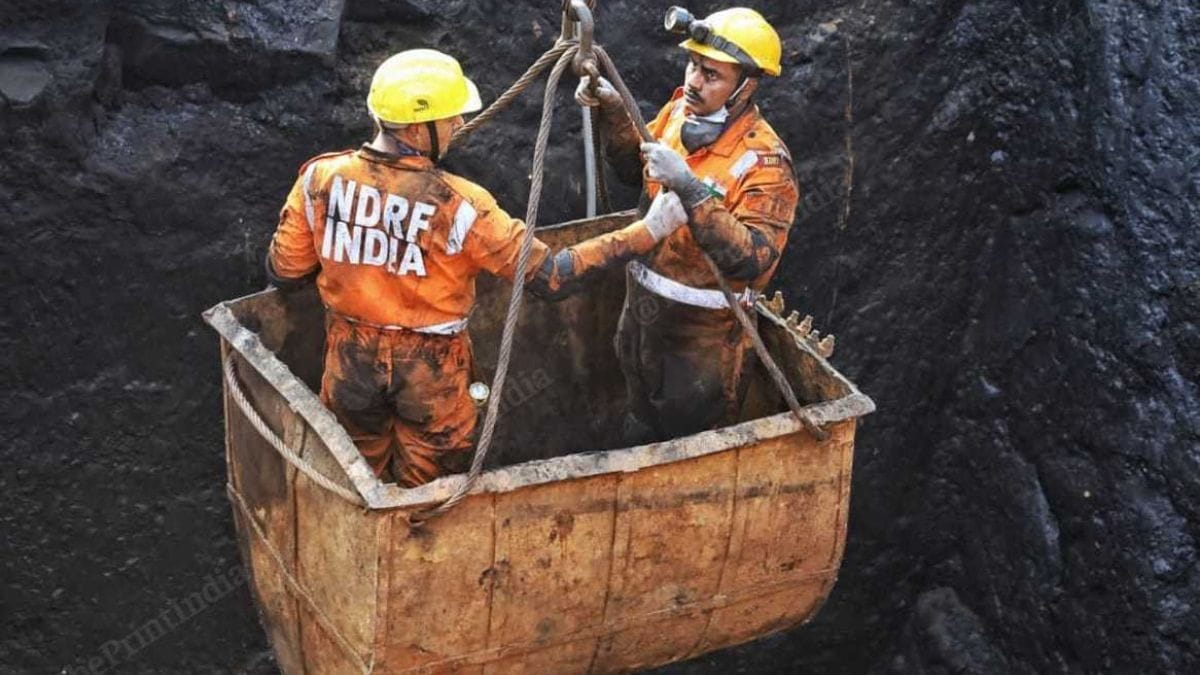
There are five more people admitted in the same hospital—three are in ICU and three are in a ward. The National Disaster Relief Force (NDRF) is still looking for survivors/bodies at the blast site. “We didn’t find anything yesterday but today we will continue, but I think by tomorrow the operation will be over,” said a source in NDRF present at the mining site.
History of mining in Meghalaya
Till 2014, coal mining was unregulated in Meghalaya. After that it was banned by the Supreme Court, following complaints of unscientific extraction, worker deaths and severe environmental damage. The National Green Tribunal cited widespread water contamination and unsafe labour practices.
The Supreme Court upheld the ban in 2019, declaring the practice illegal. However, enforcement has remained weak due to private land ownership of mineral resources, economic dependence on coal and the proliferation of thousands of small, unregulated pits across Jaintia Hills.
“There are hundreds of sites of rat-hole mining in East Jaintia Hills. One can easily spot cranes that take labourers inside the mines. Google images show the reality of illegal mining there. Whenever there is an inspection, labourers are asked to leave but they come back and continue the work,” said Agnes, an activist.
For decades, coal mining in Meghalaya—particularly in the Jaintia Hills—was one of the region’s largest sources of employment, drawing thousands of labourers from within the state as well as from Assam, Bihar and Nepal. Much of the extraction was through rat-hole mines run by private landowners under Meghalaya’s unique land ownership system, where individuals and community clans hold rights over mineral resources—a structure that complicated direct state control.
The Justice B. P. Katakey Committee, set up by hc to examine illegal mining and coal transportation in 2022, has repeatedly flagged regulatory gaps, unaccounted coal stock and weak enforcement, underscoring how the industry—despite legal prohibitions—has remained embedded in the region’s economy and labour landscape.
“There appears to be a nexus between mine operators, transporters and officials enabling illegal extraction and movement of coal. Unaccounted coal stock far exceeding declared quantities has been detected in multiple depots,” stated a report submitted by the committee on 27 January to the Meghalaya high court.
“Monitoring and enforcement mechanisms on the ground remain grossly inadequate. Illegal mining is being carried out clandestinely in remote areas, making detection difficult without sustained field surveillance,” the report stated.
(Edited by Viny Mishra)