





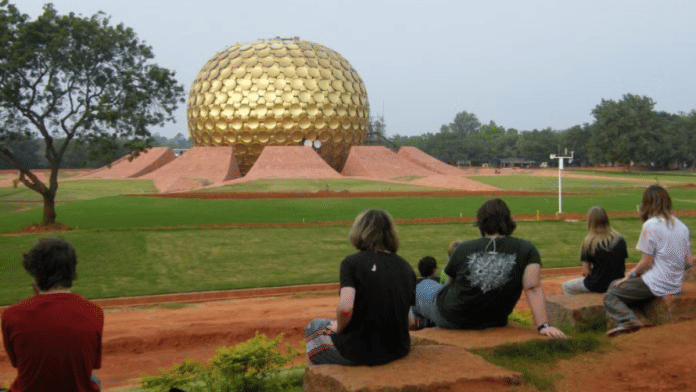



New Delhi: Months after a section of Auroville residents opposed the decision to lease 100 acres to IIT-Madras arguing that it would displace Annapurna Farm, a Parliamentary panel has reiterated their concerns and recommended identifying an alternative site nearby.
In July, the governing board of Auroville spiritual township in Tamil Nadu signed a Memorandum of Understanding (MoU) with IIT Madras to build a campus focused on sustainability and aimed at achieving global excellence in sustainable technologies.
However, the decision faced resistance from a section of residents at the township, who identified themselves as Auroville Media Liaison or part of the Working Committee of the Residents’ Assembly.
The group, who claim the project threatens their most productive organic farm, said the campus plan is a “violation of Auroville’s founding principles”. They alleged that the proposed 100-acre site—current Annapurna Farm—is the community’s central granary, and demanded reconsideration of the location. Auroville officials had denied the allegations.
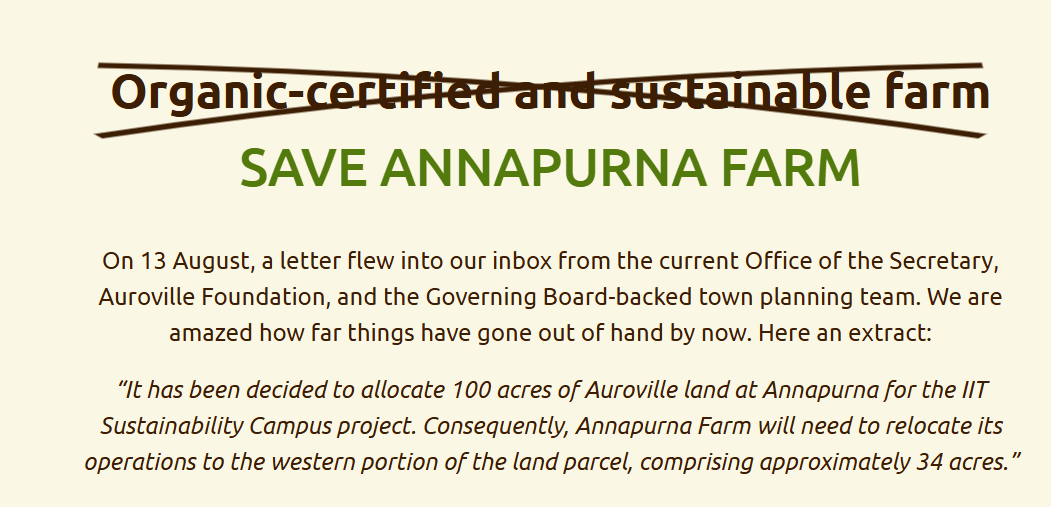
In its report presented to Parliament Monday, the Standing Committee on Education, Women, Children, Youth, and Sports, chaired by Congress Rajya Sabha MP Digvijaya Singh, welcomed the Auroville Foundation’s MoU with IIT Madras for establishing a sustainability campus, while also noting that the proposed campus land would come at the expense of the existing Annapurna Farm.
“Food sustainability is an integral part of the vision of Auroville and the loss of farmland will certainly impact the long-term ability of Auroville to sustain itself. Further, Annapurna Farms is currently engaging in organic farming, which was central to The Mother’s vision for the community,” the parliamentary panel stated. It further recommended that Annapurna farms should not be disturbed and “that alternative sites nearby should be found to situate the sustainability campus”.
When contacted, a member of the Auroville Media Liaison said they welcome the committee’s recommendation. “We are hoping that it goes in the right direction and the recommendations are implemented,” the member told ThePrint, requesting anonymity.
Also read: Auroville doesn’t give foreigners right to undermine India’s laws. Govt must step in
Why are residents opposing the proposed campus?
The group of residents who resisted the move in August alleged that Annapurna Farm is central to the township’s food system, contributing about 30 percent to Auroville’s food supply and processing most of the grains grown by other farms.
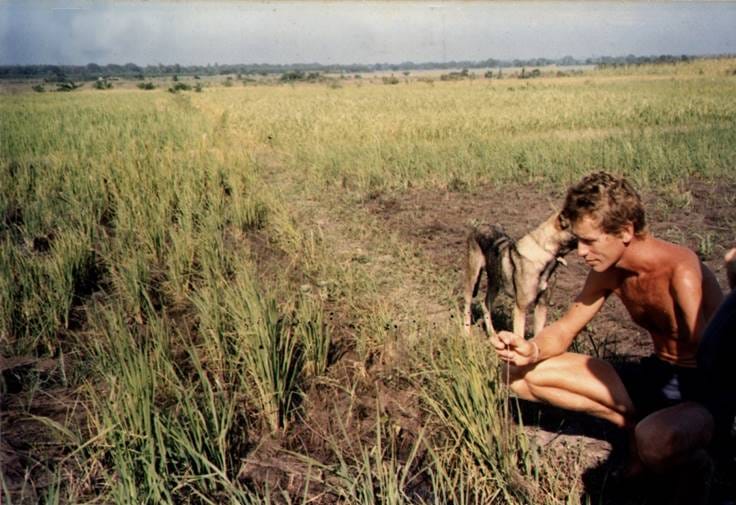
To the residents, Annapurna is a 135-acre model of regenerative agriculture—organic-certified since 2005—contending that its productivity depends on a wider ecological system of paddy fields, fodder areas, grazing land, forest buffers, and essential infrastructure. The group also alleged that the residents were not consulted in the decision-making process.
However, the Working Groups of Auroville, backed by the governing board, rejected these allegations and stated that Annapurna’s effective cultivation area is only about 30 acres, while Auroville’s total farm output, including all farms, meets less than 12 per cent of its current food needs. They added that food security could be strengthened by consolidating cultivation within the Green Belt and upgrading those farms. They denied excluding the community from the decision-making process and said that safeguards would be shared when ready.
Meanwhile, the parliamentary panel in its report Monday recommended that all land transfers in service of the Master Plan should be implemented in “full transparency and consultation with all stakeholders, including the Resident’s Assembly and the International Advisory Council”.
(Edited by Vidhi Bhutra)
Also read: Auroville drew Michel Danino to India. He now leads NCERT team drafting new social science textbooks