





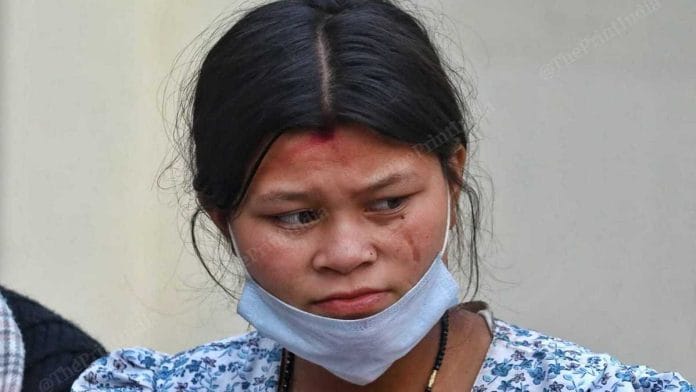



Shillong: Five days ago, 20-year-old Sanjana Malakar rushed up and down the corridors of Shillong’s NEIGRIHMS hospital, stopping guards and strangers and asking if they could help save her husband, Deb. He’d been badly burned in the rat-hole coal mine blast in Thangsko in Meghalaya’s East Jaintia Hills. She was still arranging money for his treatment when he died on 11 February, six days after the explosion.
As she prepared to take his body home for the last rites, Sanjana was as furious as she was grief-stricken. She holds the operator of the illegal mine responsible.
“He didn’t want to go to work that day. The sardar forced him. It is not a normal death but a murder. They took my husband’s life,” Sanjana said. With his death, she added, the future she looked forward to has collapsed — the children they wanted, the small house Deb had promised to build. Now, she says, she has no one left to turn to.
Four mine operators have been arrested so far, but the outrage over rat-hole mining in Meghalaya is already beginning to cool.
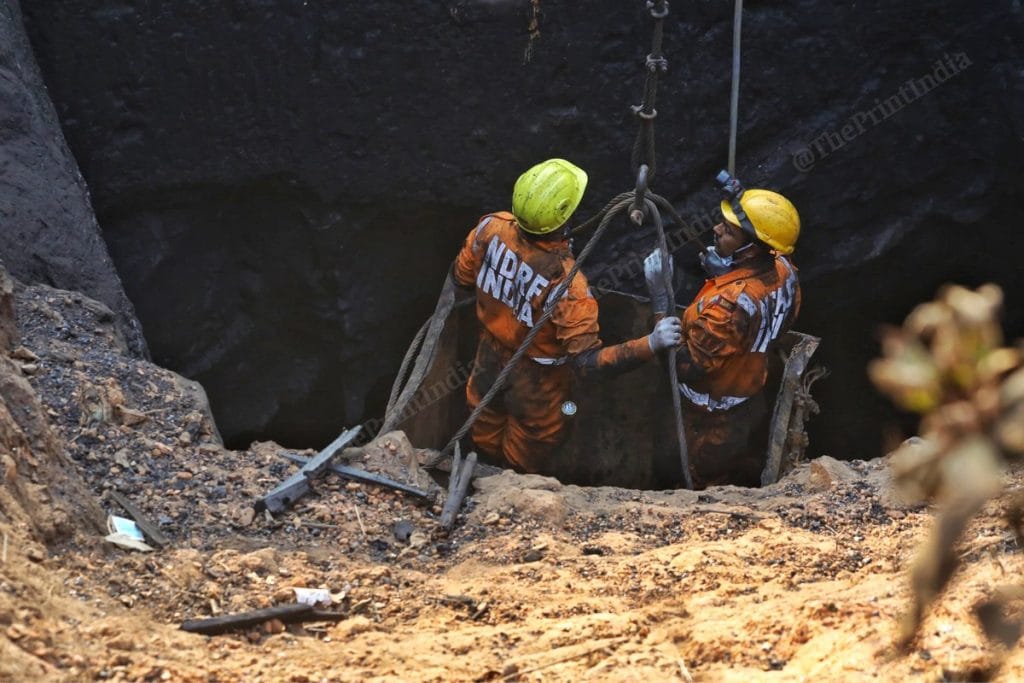
Deb Malakar was one of 31 victims of a catastrophic chain reaction. It began at 11 am on 5 February when a dynamite explosion in an empty pit ignited a pocket of methane gas. The resulting fire and collapse ripped through three adjacent, active pits, catching workers off guard. Because the blast occurred in a remote region, rescuers didn’t reach the site until evening. By the time they arrived, 18 workers were already dead; the rest, like Deb, succumbed to their injuries in the days that followed. This was no isolated incident; just weeks earlier, on 23 December, another blast in Thangsko had killed a worker on the spot.
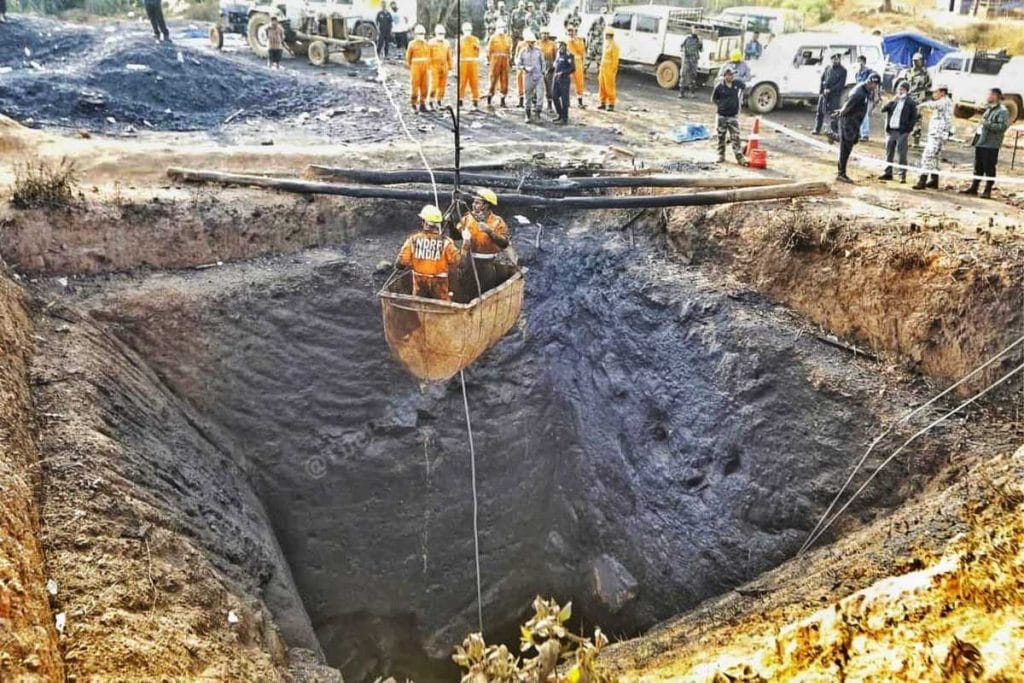
‘Rat-hole mining’ entails digging narrow horizontal tunnels, often no more than three or four feet high, into the sides of hills to reach thin coal seams. Because these mines are illegal and unregulated, they lack any scientific ventilation or gas monitoring systems. With no proper exits, miners have little chance of escape once an explosion occurs. Blasts generally occur when dynamite, used to break rocks, or even sparks from tools ignite methane gas naturally trapped in the coal seams.
In an instant the narrow shaft can turn into a deadly chamber, and in these cramped, interconnected labyrinths, destruction can easily spread to nearby pits.
Many died before, and many will die in the future. They call it illegal, but it happens openly. Hundreds of trucks cross the roads — police, politicians, everyone sees it. But it has not stopped
-Sis, former rat-hole miner
Despite a 2014 ban by the National Green Tribunal (NGT), an estimated 22,000 such mines have continued to operate across Meghalaya’s hill districts. It’s an open secret that ‘mafias’ are in charge of this low-investment, high-profit model — often requiring little more than access to land and a pool of labour.
The practice has existed in the region since the late 1980s, when coal deposits were first discovered, and quickly became the economic backbone of these pockets. Even today, the illegal trade sustains a vast ecosystem of landowners, transporters, and sardars whose coal eventually fuels cement plants and brick kilns in neighbouring states.
The nexus persists through a cycle of weak enforcement, even as activists and monitoring bodies cry themselves hoarse. Whenever a tragedy occurs, authorities conduct raids and make arrests, but local activists say that the pressure inevitably eases and it’s back to business.
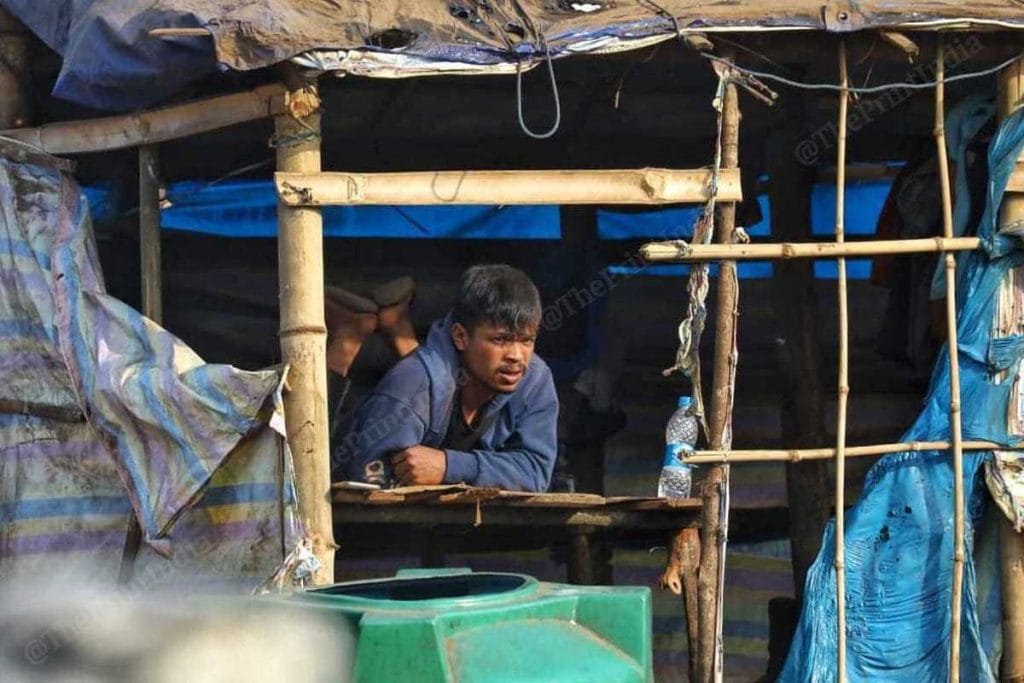
“Rat-hole mining stopped only for three to four years after the NGT ban. But since around 2018, it has resumed, and everyone is aware of it. Thousands of families and businesses depend on it — there is an entire economy that rat-hole mining fuels,” said a former mine owner, requesting anonymity.
Thousands of migrant workers from Assam, West Bengal, Nepal and Bangladesh keep coming to these hills, lured by relatively high daily wages. Workers typically earn Rs 800 to Rs 1,500 per ton of coal, which roughly amounts to a day’s work.
“There is a lack of effective enforcement and monitoring to stop the illegal mining,” said Justice BP Katakey, a retired Gauhati High Court judge and head of a committee monitoring illegal rat-hole coal mining in Meghalaya. Appointed in 2022, he has filed more than 36 reports documenting rampant violations of the rat hole mining ban to the Meghalaya High Court. He filed his latest report after visiting the blast site in Thangsko.
The court described Katakey’s latest findings as “distressing”, noting a blatant “dereliction of duty” by local authorities and that it may order a probe by a central agency.
Also Read: Buried with her favourite red dress. How Manipur gangrape survivor’s family dealt with her death
A well-oiled system
On the 30 km stretch leading to Thangsko, at least 30 abandoned rat-hole pits pockmark the hillsides — dark openings carved into red earth, some ringed by loose bamboo scaffolding. A few cranes and mounds of coal lie piled beside them.
It does not take much to run these mines. All that’s needed is a patch of land, a sardar to manage the labourers, and a crane to lower men into the abyss. Unlike formal mining, where workers use gear such as portable oxygen, hard hats, goggles, gas detectors, and reinforced steel toe boots, these labourers descend with nothing but plastic gloves and head-mounted lamps. Wages are usually paid per ton of coal extracted. Sardars make a lot more than the labourers.
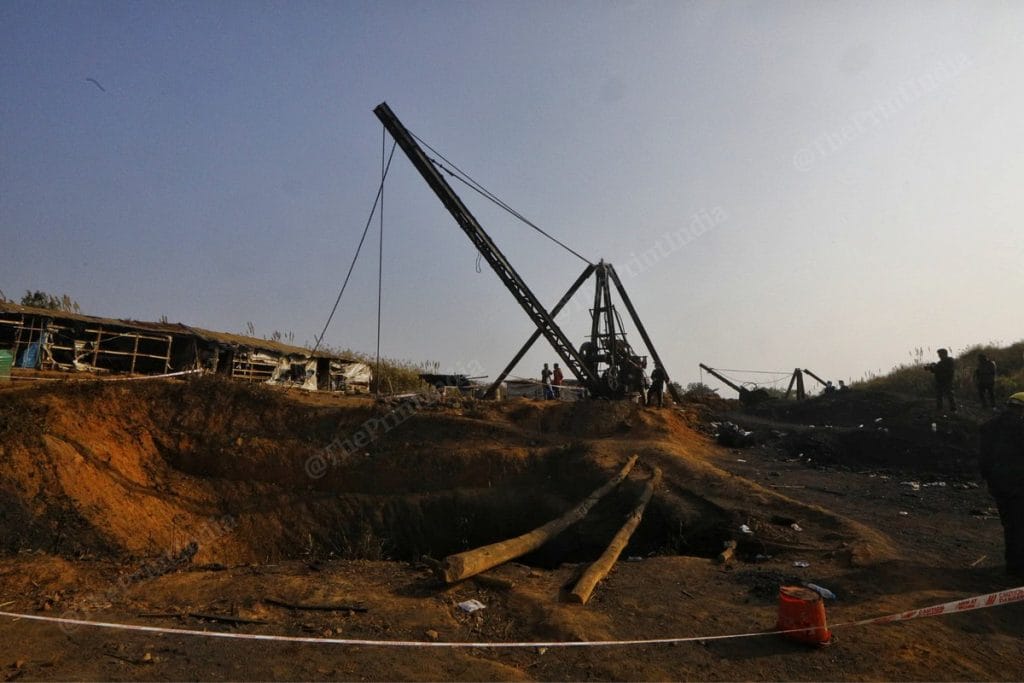
“The sardar is just like a contractor. The mine owner gets the money on a per-ton basis and the sardar gets it on a contract basis, although in some arrangements they get it on every ton,” said a local coal buyer, requesting anonymity.
The profit margins are huge. With all the investment and wages, the cost per ton is Rs 2,000-3,000, but in the market, it sells for Rs 12,000-Rs 13,000, the buyer added.
Rat-hole mining works for everyone because the cost is low and profit is high. If you see illegal mines earning more, why would anyone invest in scientific mining?
-Former mine owner asked.
Meghalaya’s coal, known for its high energy output and relatively low ash, is in steady demand among cement manufacturers and brick kilns that require sustained furnace heat. Despite the ban, transport networks move coal through Assam and adjoining states. Some consignments are routed towards Bangladesh.
“Earlier in the 1990s and 2000s when it was legal, it used to go to Haryana and Punjab as well. From the trucks to Guwahati and then through the trains,” the coal buyer added.
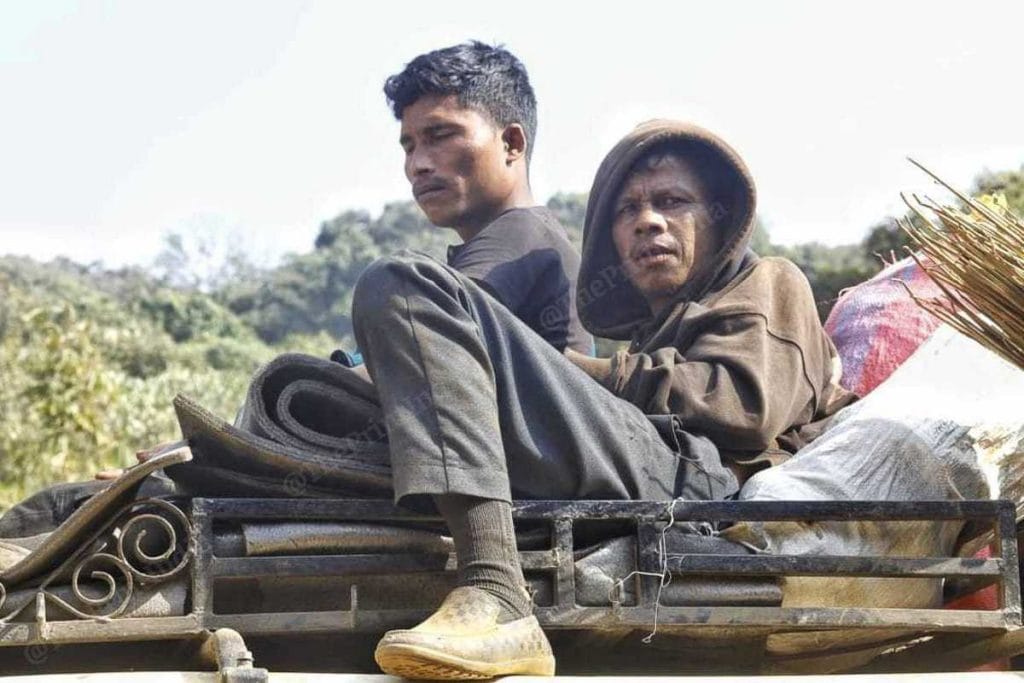
In Meghalaya, coal is buried under the land in layers. Miners have to dig down several feet to reach a coal band. Once that seam ends, they cut through sand and rock to reach the next layer. Operators argue that this makes mechanised extraction difficult and that rat hole mining is the only way.
“You can’t use cranes or heavy machines to get the coal out as it is in layers. If you use machines, it will be mixed with sand and be of no use. The only way to dig the coal from these mines is manually,” said a former mine owner on condition of anonymity.
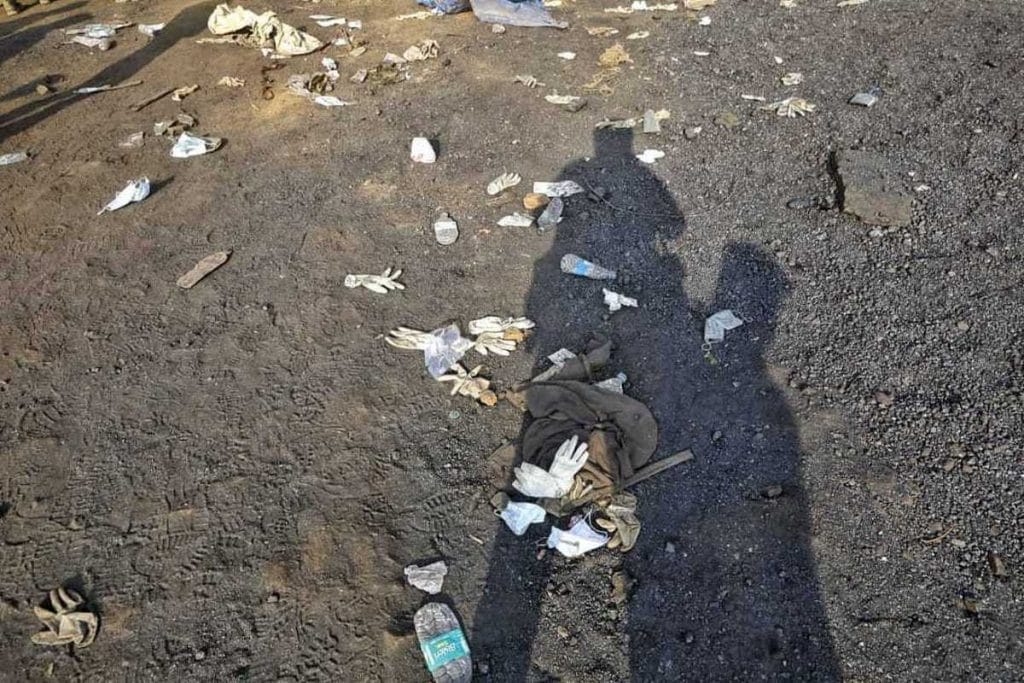
The workers choose to gamble with their lives because there are few better options when it comes to wages.
“Here they are getting Rs 800-1,500 per day. They won’t get such money in any other labour work,” shrugged the mine owner.
Thirty-nine-year-old Tara Munget, who came from Nepal to Thangsko four months ago, was working at a nearby site when the blast occurred. Despite the tragedy, he hasn’t left, hoping the work will resume.
“We don’t know about legal or illegal. The money here is good,” Munget said. “If someone digs enough coal, they can get as much as Rs 5,000 per day. That is very rare to get anywhere else.”
It is not just the labourers. Truck drivers, petrol pumps, roadside hotels, and grocery shops all depend on the coal business.
“Mine owners profit enormously. This is not helping the poor but playing with their lives. What the courts and government have declared illegal should be stopped. The trade is destroying the climate, the hills and human lives are paying for those profits,” said activist Agnes Kharshiing.
Vikash Kumar, SP of East Jaintia Hills, confirmed arrests had been made and said the police were preparing a report for the High Court. As the matter was sub judice, he declined further comment. Three coal mine owners and one operator have been arrested so far, and police are also probing the wider network, including those involved in funding the trade.
A senior police official, asking not to be named, claimed the rot goes deep.
“This mafia is connected to the high political personalities in the state,” he said.
The mafia
Across East Jaintia Hills, residents speak in hushed tones about a “coal mafia” that controls the extraction, transport, and sale of rat-hole coal.
But pinning down the leaders is difficult. Much of the land where mining takes place is either privately owned or held by community clans, whose land rights in these areas are protected under the Sixth Schedule. This complicates formal accountability, even as the mining economy continues to function under alleged political patronage.
“The police make token arrests to show that they are taking action, but the real mafia gets protection from the police and politicians,” said Kharshiing.
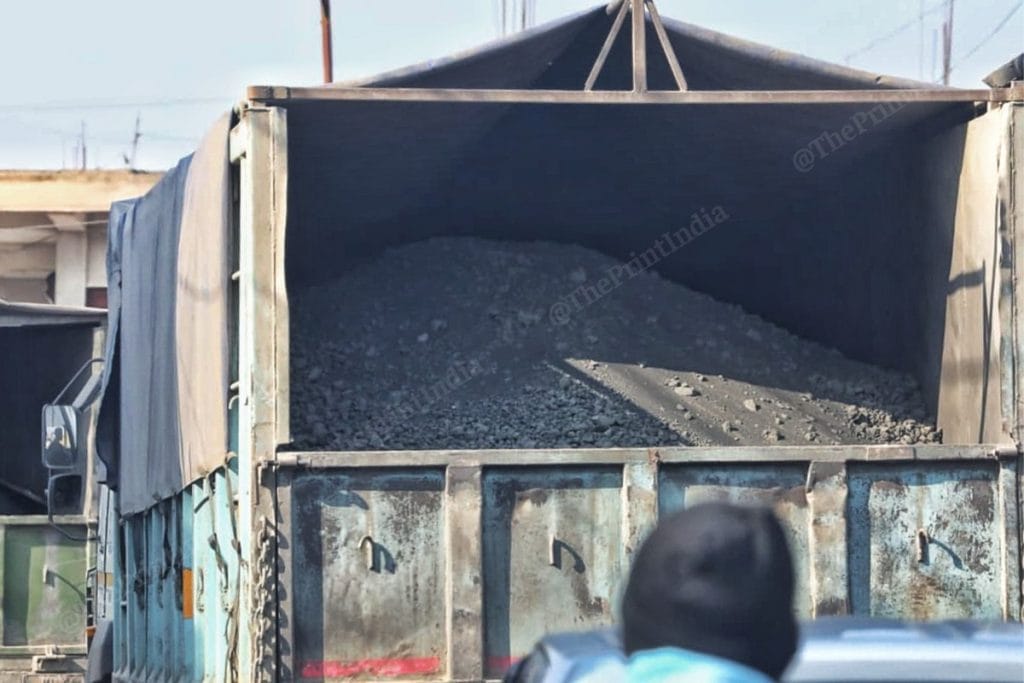
Although the mines are in plain sight, going near them or taking photographs when work is active is said to be “dangerous” by activists and local residents.
In November 2018, Kharshiing, then president of the Civil Society Women’s Organisation (CSWO), and her colleague Amita Sangma were brutally assaulted while documenting illegal transport in East Jaintia Hills. The attack left them with life-threatening injuries. In the years since, Kharshiing has also received threat calls.
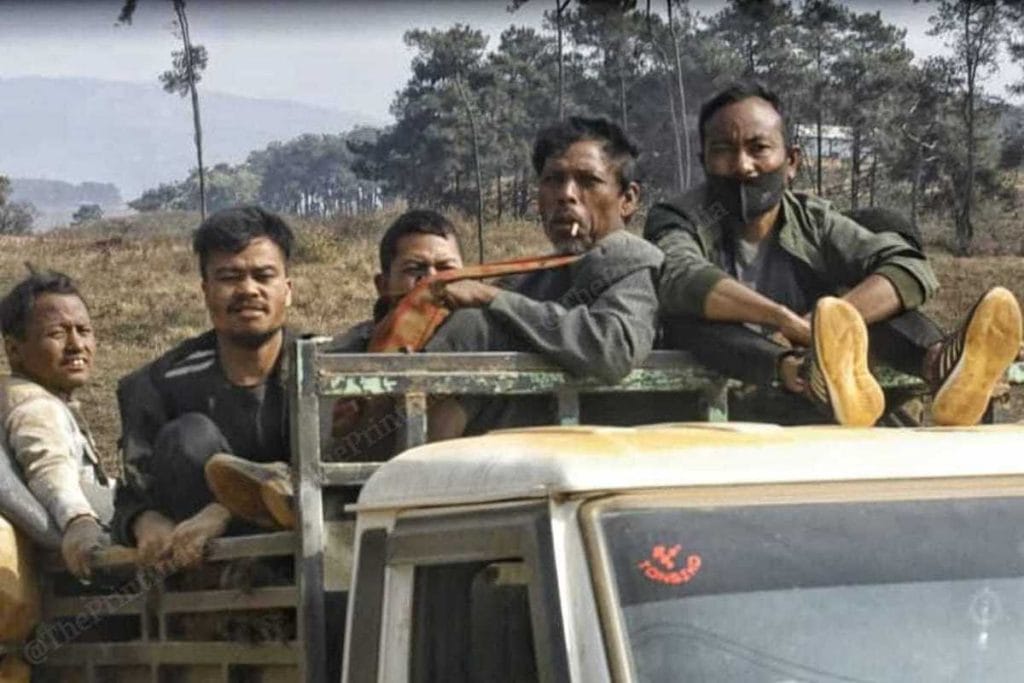
Even those who have escaped the pits are careful about not naming names or pointing fingers directly.
Thirty-nine-year-old Sis was once a rat-hole miner. Five years ago, he lost his leg in an accident inside one of the narrow tunnels — an injury that forced him to leave the mines for good. Today, he walks with an artificial limb and tracks every accident and blast.
“Many died before, and many will die in the future. This will keep continuing,” Sis said, almost in a whisper. “They call it illegal, but it happens openly. Hundreds of trucks cross the roads — police, politicians, everyone sees it. Even the courts know. But it has not stopped.”
Also Read: Northeast Hoolock gibbons are facing extinction. The lesser apes are being counted now
A paper ban
The NGT banned rat-hole coal mining in Meghalaya in 2014 after repeated complaints of water pollution — acidic discharge and sludge from the pits was turning downstream rivers toxic. But the ban lacked a plan for the thousands who relied on the coal economy.
“The matter reached the court, but they straightaway banned it. They did not consider the economic part. Many lives depended on it,” said a former mine owner.
In the years immediately after the ban, enforcement tightened. Several mines were shut, transportation reduced, and the movement of coal trucks declined.
“Between 2014-2018, mining stopped to some extent. But it never fully stopped. It continued in pockets,” the former owner said.
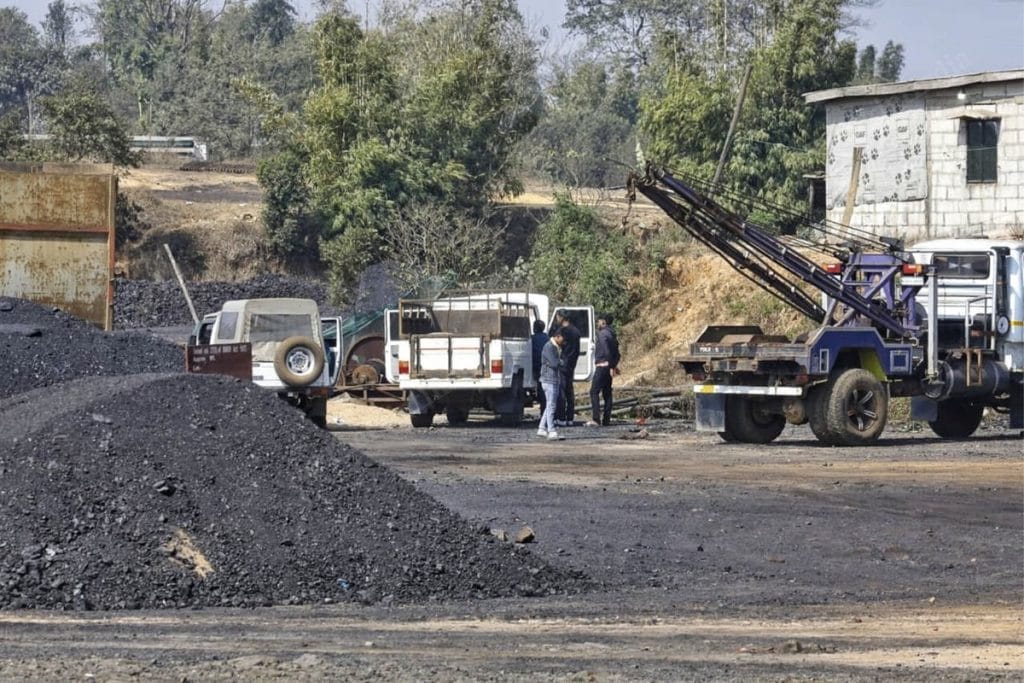
In 2019, the Supreme Court allowed transportation and disposal of coal extracted before the ban under regulated conditions and monitoring mechanisms.
Even before this, however, coal trucks continued to move through check gates across districts.
“Mining was going on back then also, but after this extension the number of trucks increased. Transportation became more open,” the former owner said.
They straightaway banned it. They did not consider the economic part. Many lives depended on it
-Former mine owner
The category of “already mined coal” soon became a grey area. Activists and monitoring reports alleged that freshly extracted coal was being passed off as pre-ban stock to allow transport. Monitoring visits documented large stockpiles on the ground.
“The government knew everything. There were lives that were getting lost. Thousands of mines were running openly under the protection of police and politicians,” said activist Amita Sangma.
In January 2025, Meghalaya Chief Minister Conrad Sangma announced the decision to start ‘scientific’ coal mining in Meghalaya after three mining operators were granted approval by the central government. He added that 12 other applicants were in the final stage of approvals.
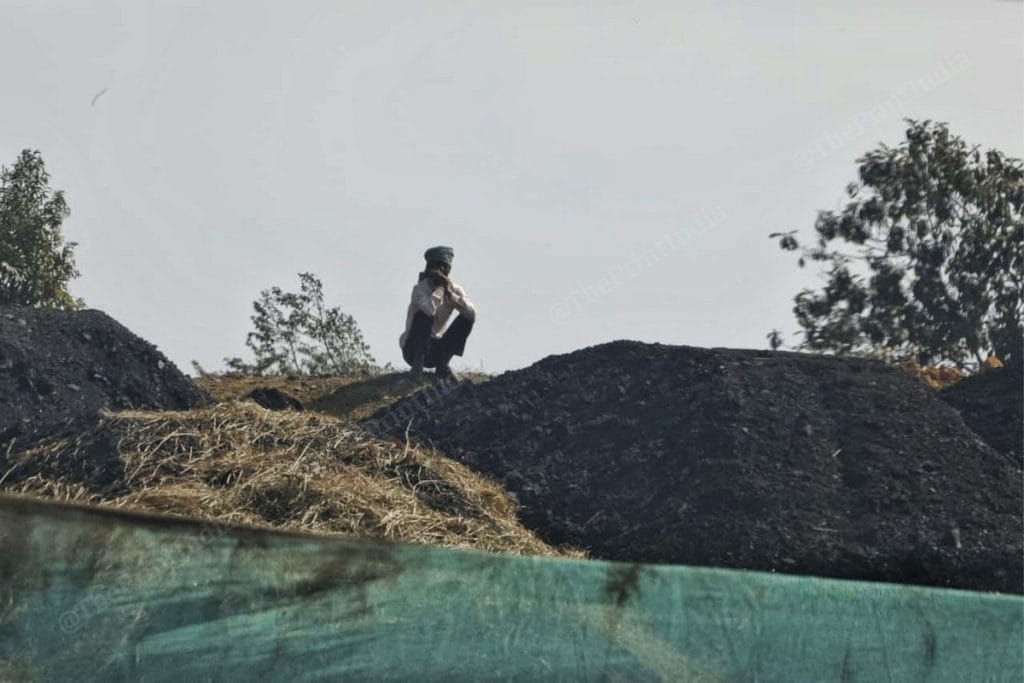
But on the ground, activists and former operators say that such ‘scientific’ mines are not visibly functional or operational at scale.
“The CM says there are scientific mines — he should tell us where they are because there are none,” Kharshiing said.
Those who have worked in the trade say scientific mining is difficult and expensive to operationalise in Meghalaya’s terrain and ownership structure.
“Rat-hole mining works for everyone because the cost is low and profit is high. If you see illegal mines earning more, why would anyone invest in scientific mining?” the former mine owner asked.
While government reports are filed and activists demand inquiries, the funerals in the hills continue.
“My world ended that day,” Sanjana Malakar said. “Nothing they do now will change that.”
(Edited by Asavari Singh)
I have lived in this state for over three years and know it for a fact that corruption knows no bounds. From the clerk to the top boss, everyone in a government department is neck deep in corruption. The fascinating thing is it’s out in the open – people don’t hide it. Everything has a rate -and everyone knows it and pays to get the job done. There is no shame associated with corruption – no attempt is made to cloak it. It is what is it.
And if you are a non-tribal like Ms. Sanjana Malakar you can forget about justice and fairness – these words simply don’t exist for the non-tribals residing in this state.