





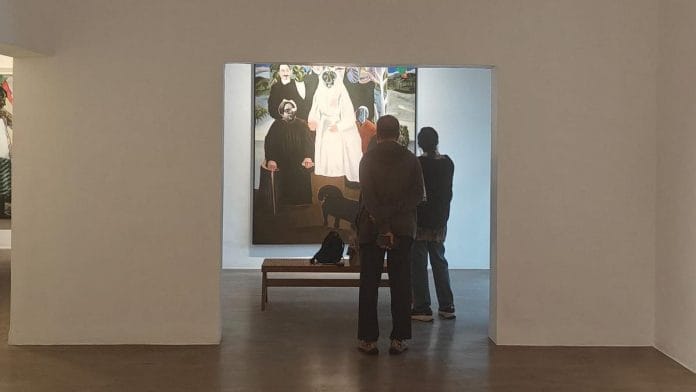



New Delhi: After six years away from the capital, Mumbai artist Atul Dodiya has returned with a collection that turns looking at art into a restless conversation across time. His new solo show at Vadehra Art Gallery, The Gatecrasher, brings him into dialogue with the old masters and audiences alike, where a French painting collides with an Indian modernist, or a sparrow from Thane lands in a Manhattan museum.
It is a commentary on the anthropology of viewing art.
“The starting point for these works is not the history of art; these works are about looking at art, seeing what happens when we see something, and how, when one sees something, one is reminded of something else,” said Dodiya, 67.
The exhibition features 12 large-scale oil paintings, spanning Mumbai and Lahore to Manhattan and Spain, and drawing on Dodiya’s own legacy as well as history, culture, cinema, and literature. It is on display till 10 March.
Also Read: The Golden Age of Hollywood comes alive in Delhi—Chaplin, Caligari, & Gujarati Captain Marvel
Who’s the real gatecrasher?
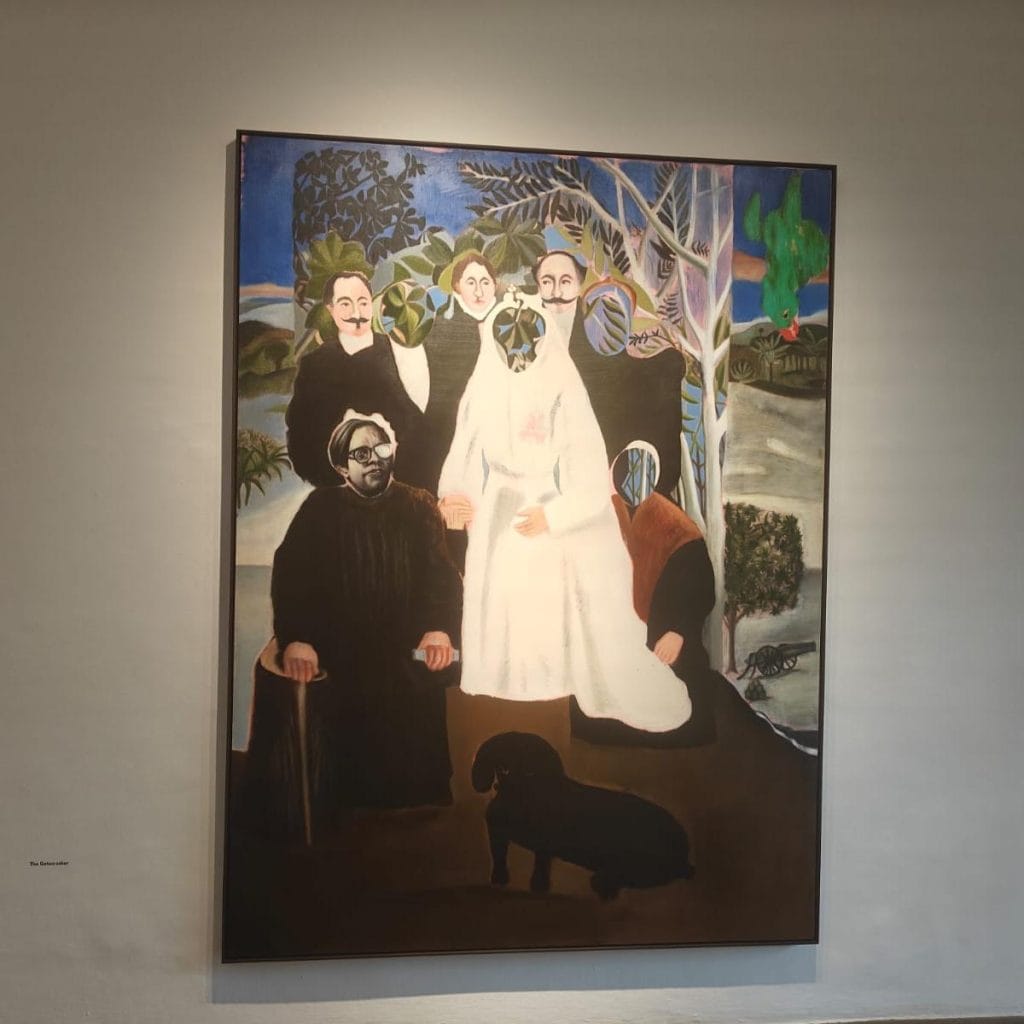
Dodiya brings viewers face to face with some of art history’s most recognisable names, and then asks who doesn’t belong. The title work, The Gatecrasher, reimagines Henri Rousseau’s 1905 painting The Wedding Party.
The white-robed ‘bride’ now has an oval cut-out for a face, and another black-clad figure has the visage of Bhupen Khakhar, Dodiya’s friend and fellow modernist. There is also a black dog, and a large, almost discordant falling parrot, inspired by a painting by the late painter and poet Gieve Patel.
“That [parrot] image is from a very dear friend of mine, Gieve Patel, who I miss a lot because I lost him two years back,” Dodiya said. “So who is the gatecrasher — Bhupen, the dog, or the parrot? I feel that as artists, we generate, we raise questions, and there’s no intention to give answers.”
Manhattan and Mamdani
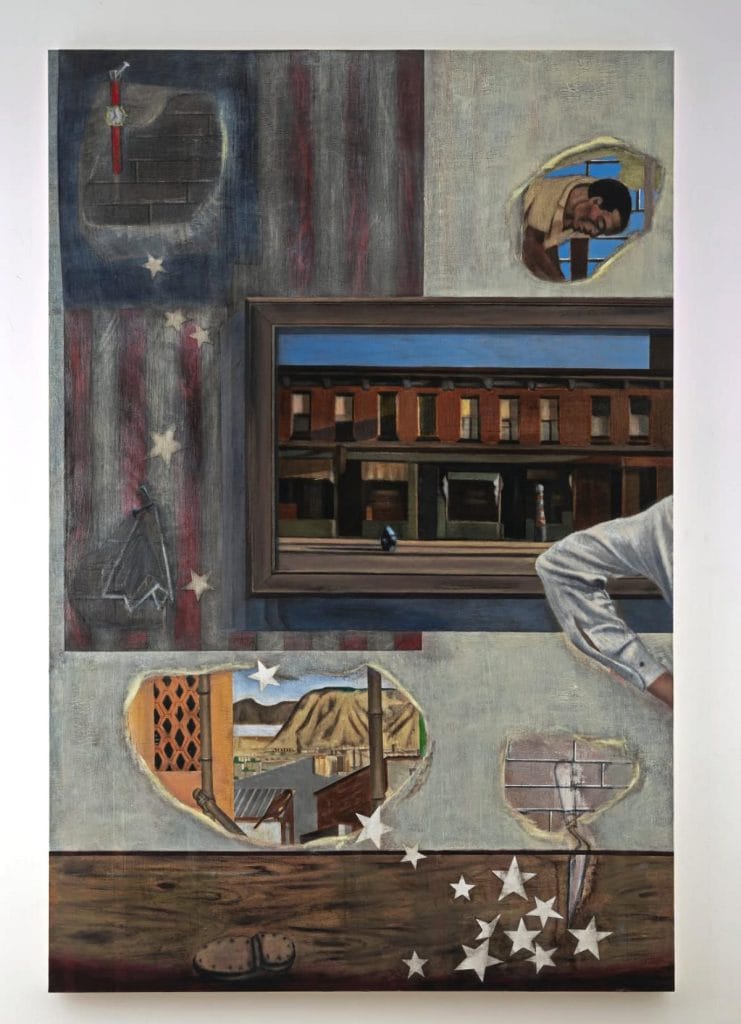
The Sparrow in Manhattan is a collision of worlds and a political statement.
The canvas incorporates elements, including a sparrow, from Sudhir Patwardhan’s The Fall, which depicts a construction worker tumbling from scaffolding in Thane. Dodiya folds the painting’s real-world journey into his own work. The Fall was acquired by the Metropolitan Museum of Art, which also houses Jasper Johns’s American flag paintings, and so the star-spangled banner appears here too. Except it is torn, and its stars seem to fall, pointing to what Dodiya describes as the fallout of Trump-era anti-immigration politics.
Then there is a white-sleeved arm entering the frame, which Dodiya said was inspired by New York mayor Zohran Mamdani. When Dodiya was working on the painting, Mamdani announced his candidacy and later won. The image of an outsider entering an established space stayed with the artist, much like a traveller elbowing into a Mumbai local.
“I thought, Sudhir Patwardhan entering the Metropolitan Museum collection — is it gatecrashing? Is it that man whom you move by elbowing to enter a train? Or is it someone elbowing and entering Hopper’s world that is New York City? That reminded me of Zohran Mamdani,” said Dodiya.
Who is looking at whom?
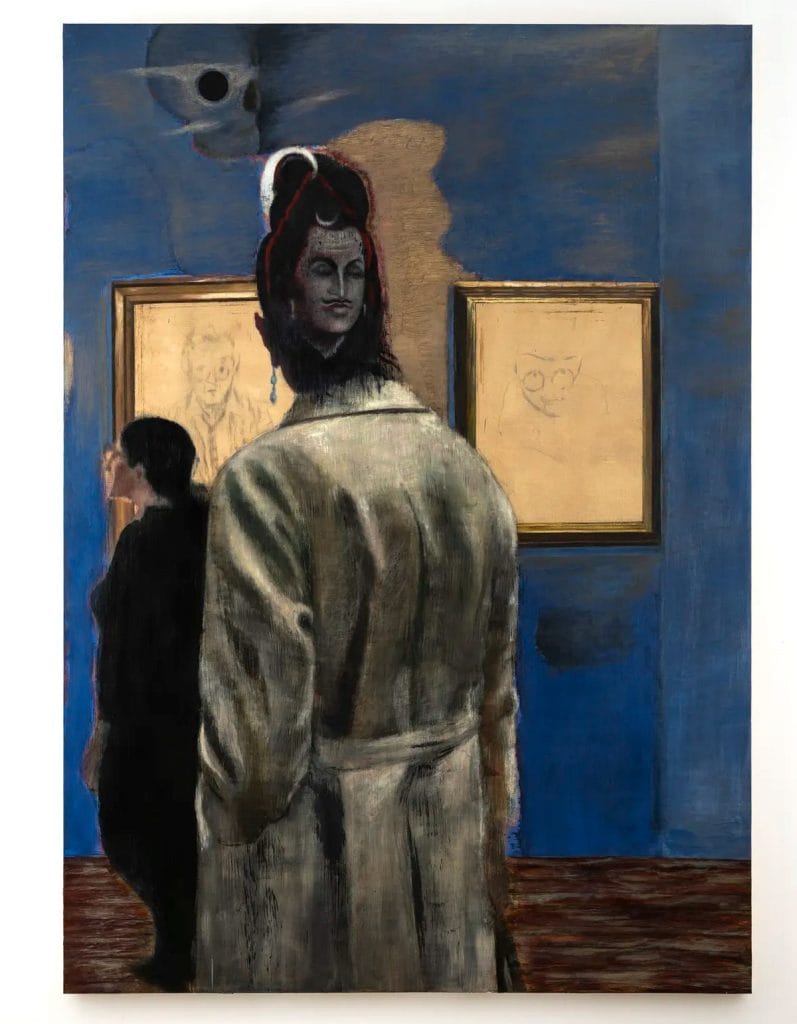
In The Third Eye, the act of looking is staged in layers. A woman stands before a painting, her back to the viewer. Her hair is piled high, and within it appears the face of Shiva, eyes closed. In one corner stands another woman — the artist’s wife, Anju Dodiya, herself a painter — gazing intently at something the viewer cannot see.
“When I thought of painting Shiva, I did not know which Shiva to paint — from an earlier oleograph or go for a Rajput miniature. I should be baffled by my own work. If I am not baffled, then it will be difficult for me to surprise my viewer,” he said.
In each work, Dodiya creates a microcosm of art history and his own journey.
“When I joined the JJ School of Art, I would look at other people’s art. That inspiration, that engagement with artists from everywhere has been part of my vocabulary. I would include their imagery in my work. My work will have some sort of imaginary dialogue with people like, say, Van Gogh or Picasso,” said Dodiya.
Also Read: From Orhan Pamuk’s Istanbul to Amir Khusro’s Delhi — how cities carry love, loss
A room in Lahore for Amrita Sher-Gil
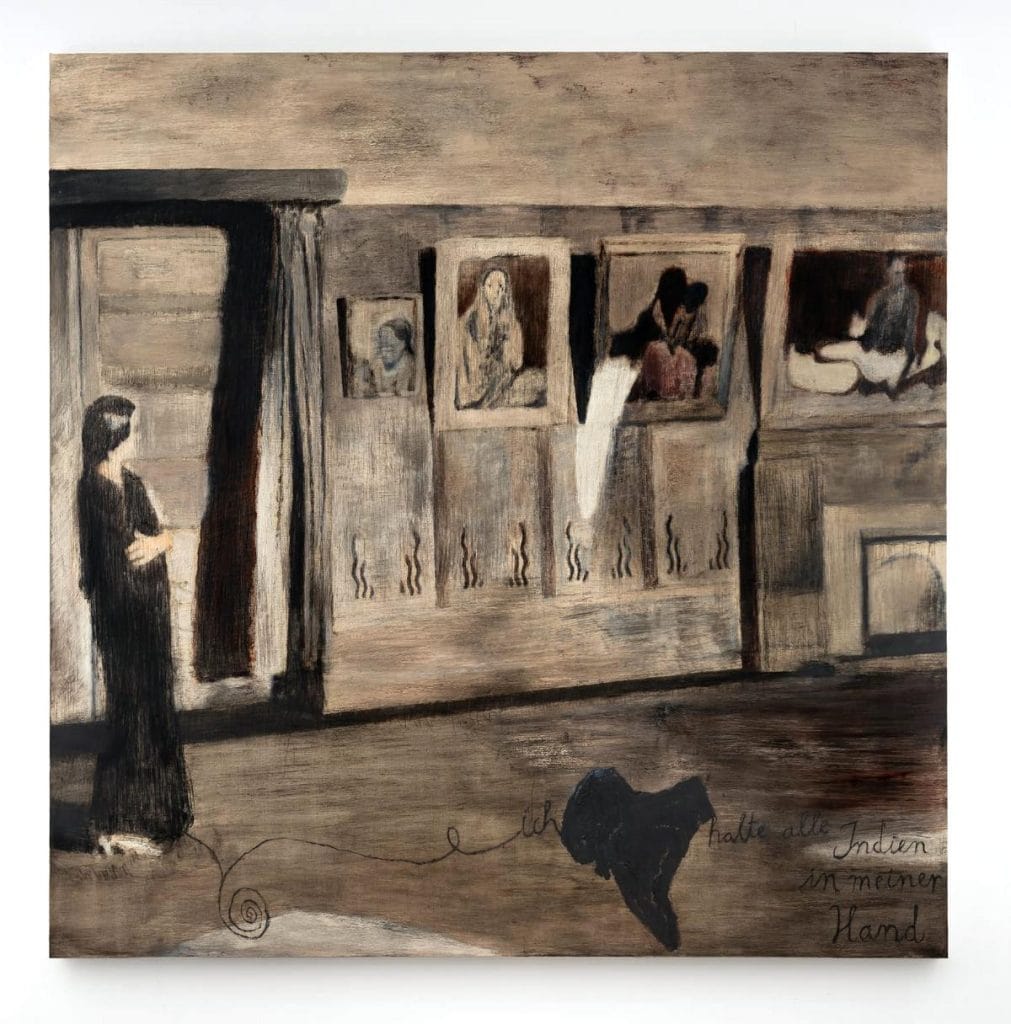
One of the artists who has long fascinated Dodiya is Amrita Sher-Gil. After seeing a stamp-sized photograph of her, he was intrigued by how life must have been for her before Partition.
A letter she wrote to art critic Karl Khandelwal — in which she expressed her yearning to leave Paris and work in India — became the germ of his painting Faletti’s Hotel, Lahore. It imagines Sher-Gil in pre-Partition Lahore, poised between cities, languages, histories.
It is a charcoal drawing with subtly transparent oil layered over it, deepened with shades of brown and ochre. At the bottom, the words “I hold all the Indias in my hand” appear in German — an ode to the title of an exhibition by German artist Anselm Kiefer.
“My intention is to provoke a narrative which is not literal and obvious, but which generates notions and ideas and concepts. It may not gel with what the painter tried to do or what the painter was thinking. That’s the way it should be,” said Dodiya.
(Edited by Asavari Singh)