





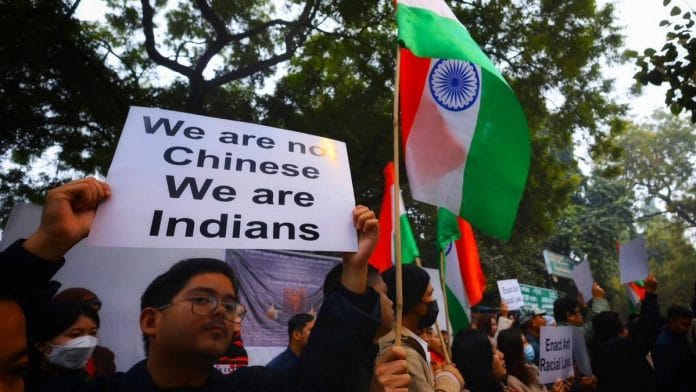



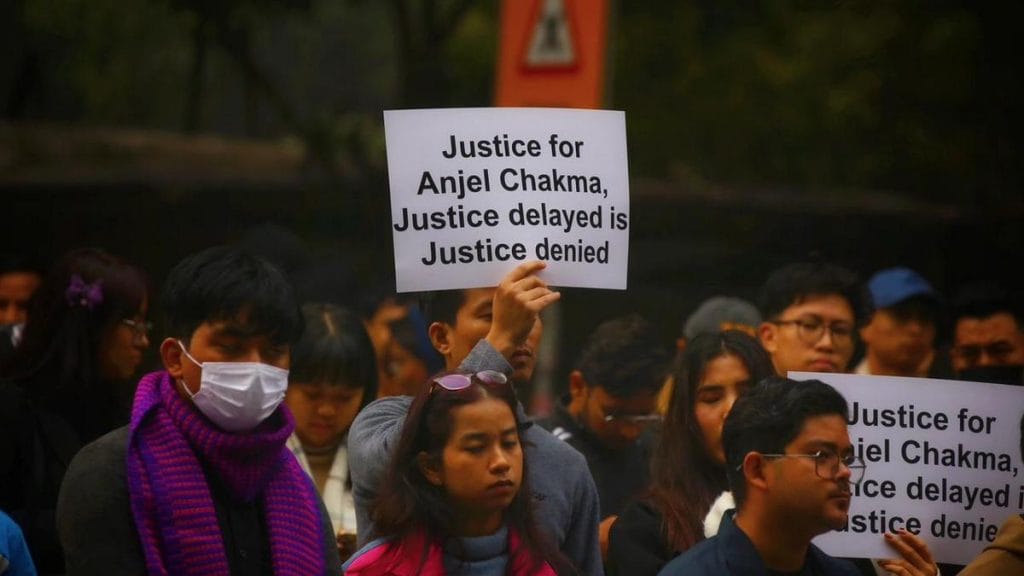
New Delhi: No candlelight vigil was permitted by the authorities, but slogans of “Justice for Anjel Chakma” and “We are not Chinese” echoed through Delhi’s Jantar Mantar on New Year’s Eve, as hundreds of students gathered to show solidarity and demand justice for the 24-year-old student from Tripura, who died on 25 December following a racially motivated attack in Dehradun.
Chakma, who was studying at a private university in Dehradun, was attacked on 9 December, during which racial slurs were hurled at him. The attackers called him “Chinese momo”.
The father of the victim, Tarun Chakma, said his son told the attackers he “was also Indian, not Chinese”, but they continued to assault him with knives and blunt objects. Anjel Chakma succumbed to his injuries 17 days after being attacked.
The protest, titled ‘United against hate: A candlelight vigil in memory of Anjel Chakma’, also became an assertion of identity, with students from northeastern communities stressing their Indianness. The students arrived with lit candles, but had to put them out at the protest site.
“I am Indian, nobody can snatch my right to be Indian by calling me momo, Chinese,” said Uttam Chakma, advisor to the All India Chakma Students’ Union.
Also Read: Fear grips Northeast students in Dehradun after racial attack claims life of 24-yr-old Tripura boy
Constant fight to prove Indian identity
Students from universities across the city reached Jantar Mantar despite many being in the middle of semester exams. Some held posters reading “protect the northeast community”, “enact anti-racial laws”, and “zero tolerance for racial crime”.
“Northeast people are disappointed. For how long are we going to stay like this?” said one of the speakers, Soziio Mao, president of the Nagaland Student Union.
Addressing the crowd, he added: “We come from the borders, the areas face illegal immigration on a daily basis, we protect our homes and India.” He also called for the Indian government to play a stronger and stricter role in protecting Indians and our identity. “This is our country, and we are not here to harm anyone.”
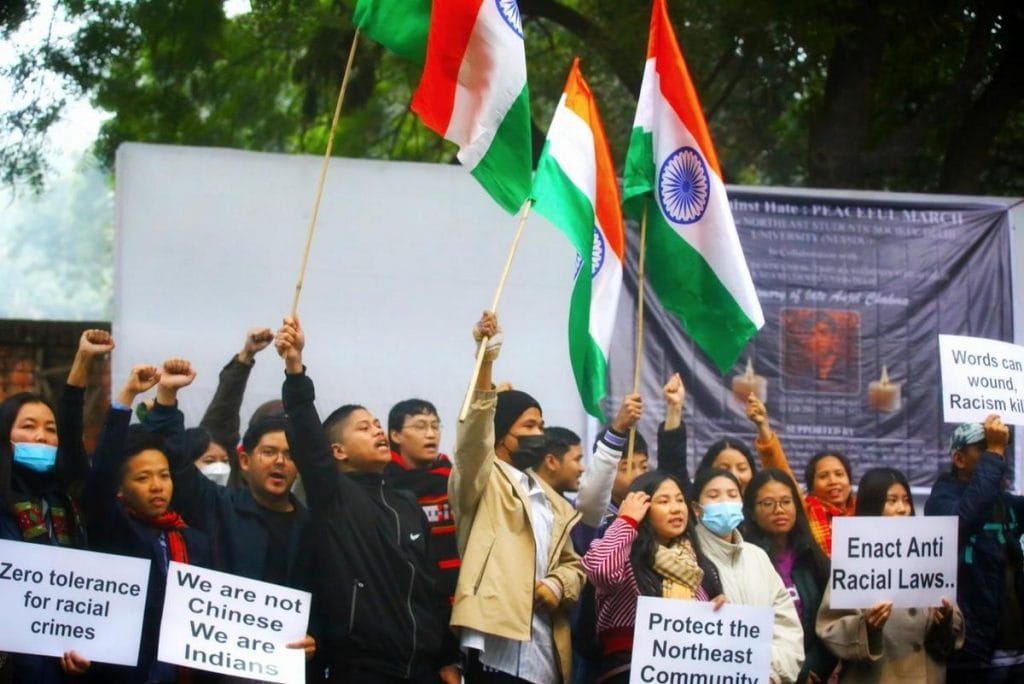
Abhilasha Saikia, one of the organisers of Wednesday’s protest told ThePrint that the student body held the candlelight vigil for those who had lost their lives to racial attacks, as well as for those who face racially motivated violence every day. “From catcalling to being beaten up on the streets,” she said.
Saikia, the president of NESSDU—the Northeast students’ union at Delhi University—added that while India is a diverse country with different cultures, habits, and traditions, people from the Northeast are regularly targeted for their appearance and what they eat.
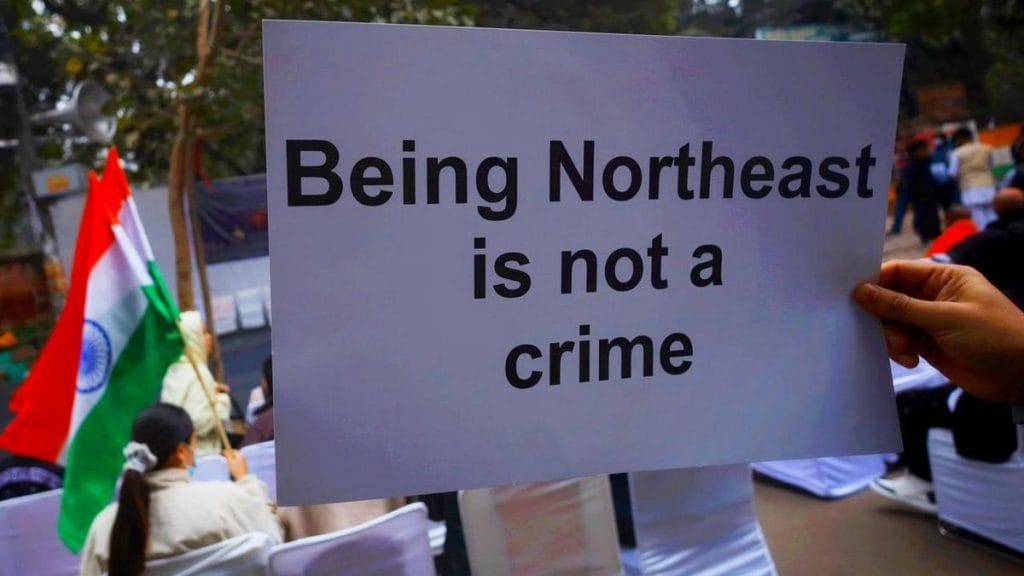
“It is hypocritical when there is outrage over other countries making claims over the Northeast,” she said. “But then one of us is killed brutally in mainland Indian states.” She pointed out that families of northeastern students studying in Delhi University and other institutions live with the fear that their children could be the next target.
Student organisations such as the Nagaland Student Union, Tripura Students Forum, All Assamese Students’ Association, Sikkim Student Association, Manipur Students Association (Delhi), and Manipur Youth Innovative Organisation (Delhi) signed a memorandum demanding justice for Chakma. It demanded the transfer of the case to the CBI and for the trial to be shifted from Uttarakhand to Delhi.
“It is not enough to only spread awareness on social media. It is important to show up on the streets so that such an incident never happens. The voice of the youth matters,” said Saikia.
Also Read: Sexualise, dehumanise Northeast people—Indian YouTubers have a new formula for more views
‘Do not feel safe in Delhi’
Second-year Political Science (Honours) Delhi University student Saichandra attended the protest despite his ongoing semester exams, saying it was important for him to show up.
“When Indians face racism abroad, we call it injustice. But why do we face racism and racial attacks in our own country?” the 21-year-old asked.
Saichandra, who comes from Manipur, said his college mates often did not know where his state was. Since arriving in the national capital last year, he said he had faced verbal racial abuse on campus.
“People call us ‘Chinese’, ‘momo’ or ‘Nepalese’, and it makes me feel bad. Educated, literate people use such slurs for us. I do not feel safe in Delhi. I am scared to step outside at night,” he said.
(Edited by Asavari Singh)