





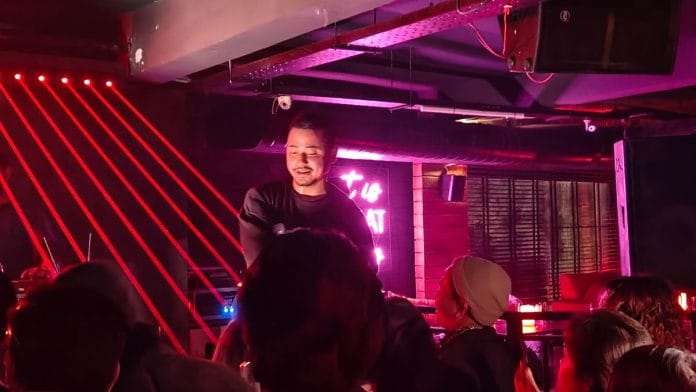



New Delhi: They arrived at midnight as tipsy fans at South Delhi’s Moonshine pub, braving the biting cold to listen to two of their favourite rappers from Northeast, Moko Koza and Yelhomie. The wait was worth. Dressed in all black — a hoodie and pants, with sneakers — Koza’s cheer to the audience hit differently. “All my tribal people in the house,” he said, and the audience erupted with energy. In no time, the small dance floor was filled with people, who had their phones out, recording the rapper, and singing along.
Nagaland’s Moko Koza and Manipur’s Yelhmonie’s Delhi performance was a glimpse of the increasing stage visibility that is spotlighting rappers from Northeast India. Their peers across languages, tribes and states are writing songs and rapping about issues that plague the Northeast–from racism, self-determination, to questions of identity and history. Over the years, Moko Koza has diversified his rap by working with both Nagamese and English language rappers. Northeast has been home to legends such as Bhupen Hazarika, Zubeen Garg and Lou Majaw, known for acing traditional music genres. The rap wave is the latest arc in the region’s music that is now being recognised by people outside the state. And music festivals have encouraged artistes from across India and the world to travel to the Northeast.
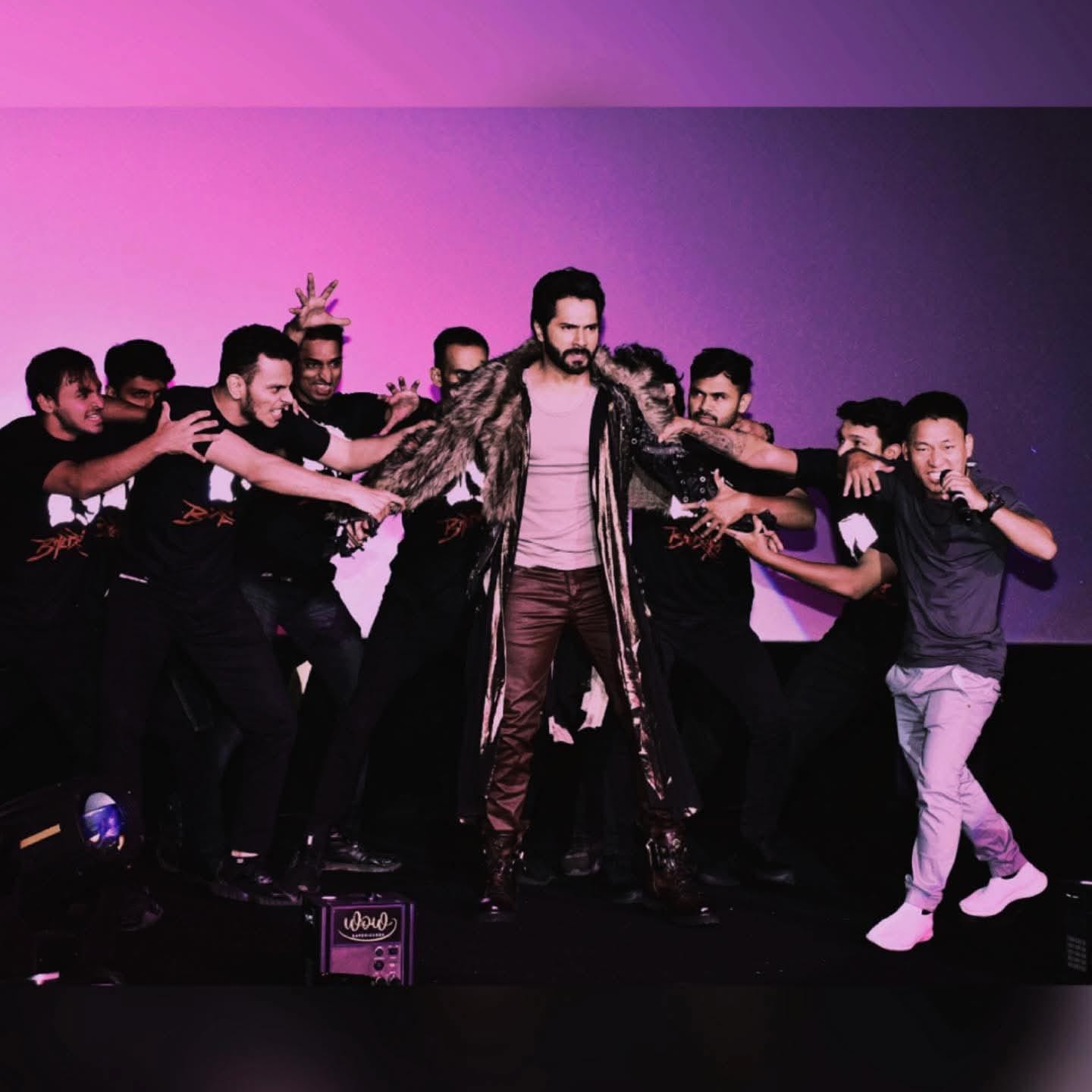
Bollywood and web series is slowly giving these rappers a pan India identity. Diaphai Lamere aka Reble blazed her way into everyone’s playlist with smash hit Run Down The City from Dhurandhar. Koza’s Aladdin featured on Amazon Prime Video’s Pataal Lok, while K4Kekho sang the theme song for Amar Kaushik’s horror comedy Bhediya (2022). Tribal identity, corrupt officials, unemployment, drugs and history, the young rappers from Northeast are loyal to the region’s dominating themes.
“Shows like Pataal Lok help change what outsiders think of us. People still believe that if they come to Nagalnd, we will chop their heads off,” said Mvüko Koza, known professionally as Moko Koza, with a wry smile.
But at the Delhi event at the Moonshine café, there was harmony among fans.
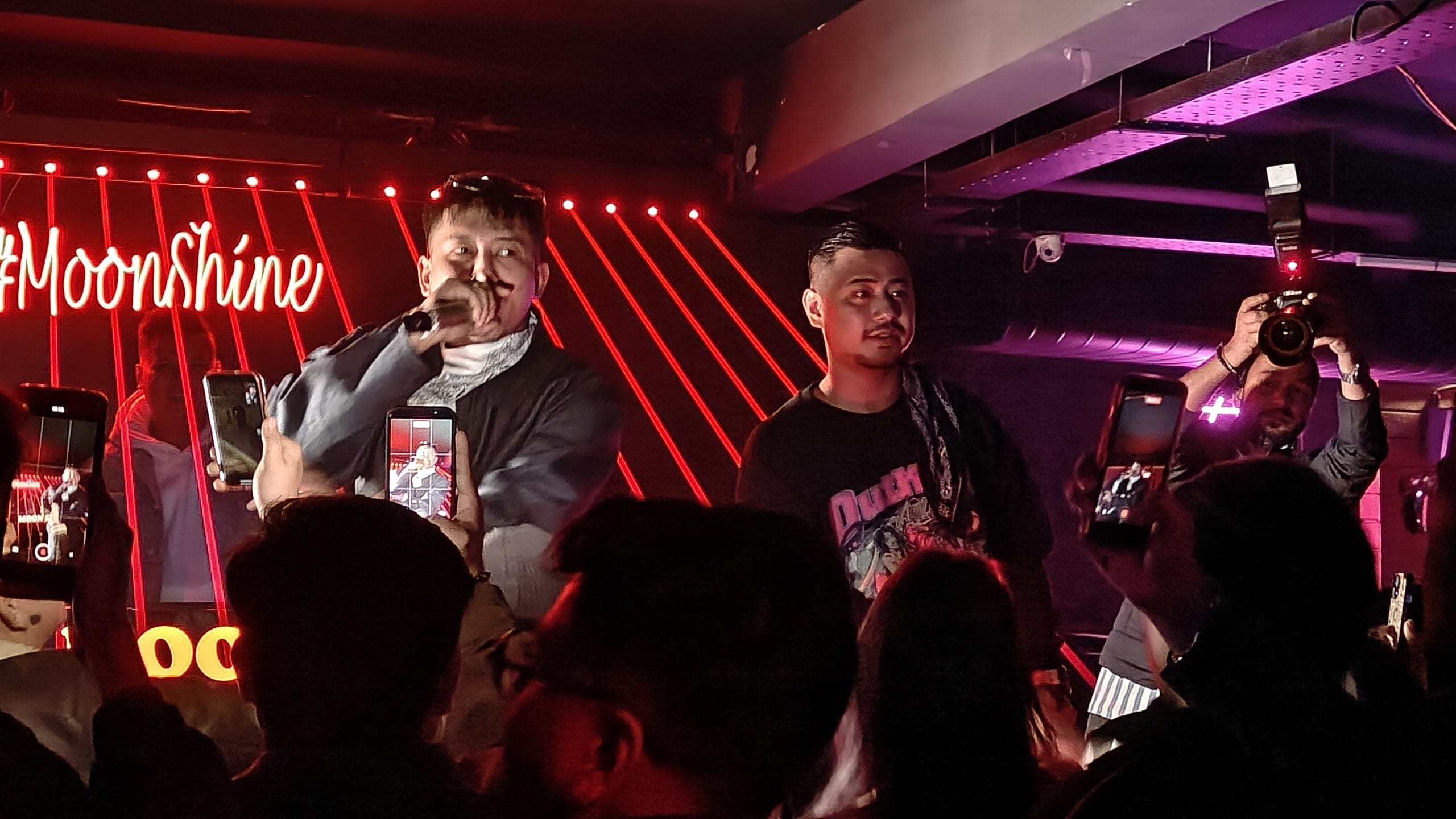
“My friend is from Kohima and we studied together in DU. So I have been listening to rap from the region for quite some time now. I love their food, and I have been to Dzukou Valley too. Music is in their DNA and you do not need to know the language to enjoy the music,” said Sushil Nayak, a young businessman from Gurgaon. Holding his glass of whiskey, he tapped his feet to Moko Koza’s Puisa song, his enthusiasm matching any other Nagamese in the house.
The boy from the hills
Koza belted out one popular track after another for his patrons at Moonshine. But it was Naga Manu that brought loudest cheers. The video of the song has 4.1 million views on YouTube, and features Koza getting up in the morning and walking through alleys of Kohima. He also holds up a plate of pork and ice, along with steamed vegetables–a staple meal of the state.
The song is a satire on the Naga tribe but also celebrates their life, food, and addresses the stereotypes associated with Nagaland.
“Let people judge us because of our food habits and our ways/What I eat and how I look is none of their business/We came from a generation of headhunters/We are all proud to be called a Naga” goes one section of the rap.
In Boy From The Hills, which was released in September 2023, Moko Koza celebrates his Naga ancestry.
The song draws inspiration from the stories his grandmother told him—about the horrors inflicted by the Japanese Army upon the Naga people during World War II, particularly the Battle of Kohima in 1944.
“An event that changed the course of world history. An event that tested the resilience of the Nagas. An event that has been famously dubbed ‘The Stalingrad of the East’, reads the introduction of the music video.
The video features women and men dressed in traditional attires from the various sub-tribes, talking about the times, interspersed with rap by Moko Koza.
His other compositions like Tribally Savage also highlights the unique complex identity of being a Naga.
On the other side in Meghalaya, Reble raps in Khasi and Pnar, the culture she grew up with, and English.
“I come from the land of the abyss/In a place, where the suns rise against the rain and the storms” are the opening lines of her single Terror, which came out in 2024.
Born in Nongbah, West Jaintia Hills, Reble began rapping at the age of 11, scribbling rhymes, rapping while also acing academically. Linkin Park, Eminem and André 3000 were her inspiration. She exploded into the mainstream with impactful singles like Terror and Set It Off. Her work often focuses on themes of identity, resistance, and rage.
“Identity is for every person. I’m personally grateful for whatever my country and state has offered me and I take pride in that. Our culture and upbringing are what shape us as people and that will always be a part of me,” said Reble.
Also read: How basic Bengali food became a premium experience at Sienna
‘I could never survive a 9/5’
For most Indian middle-class families, taking up science and securing a government job is the goal. And it was no different for the families of Reble, Moko Koza and K4Kekho.
Born in a Christian family in Kohima, Moko Koza grew up in a household alongside six siblings. His first brush with Hip Hop came as a nine-year-old. Eminem’s 8 Mile would change something in him, lighting the rap fire.
The shy, timid boy, was good in studies and even secured admission in a medical college.
“Government job is after all the ultimate dream here,” said Koza with a smile. But he managed to convince his parents to study anthropology in Kohima instead.
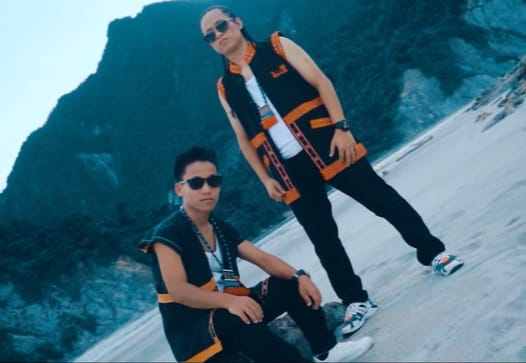
That is where his dream to become a rapper grew. And a lot of it was self-teaching. The Internet became Moko Koza’s guru, as he watched rappers in loop and consumed tutorials that skilled him in writing verses. Soon his compositions would start appearing on Facebook.
Moko Koza’s 2017 Nagamese rap Puisa–‘money’ in Nagamese–reflects on how the youth are exhausted by systemic corruption that has afflicted Nagaland for decades. ‘Money is the root of all evil/Dear Government, please spare some change and fill it up in our potholes,” raps Koza in the song.
Moko Koza has performed it not just in front of cheering youngsters but also in front of government officials who loved the song.
Puisa’s success convinced Koza of a career in rap music. He signed a contract with the Dimapur-based label Infinity Inc, started by fellow Nagaland rapper Asalie Peseyie.
Growing up in Chigan of Tirap district, K4Kekho aka Kekho Thiamkho had his teachers in shock when he performed at a school function all those years ago.
“Fellow students went crazy because that’s the first time they saw someone perform a Hip Hop song,” he said. The response also made him create his rapper name.
Kekho Thiamkho, now 30, belongs to the Ollo or Nocte indigenous community. 2015 was a turning point for the young man who wrote his first popular rap I am an Indian, and also won his first ever rap battle at an event in the state. That convinced his parents that he could survive without a government job too.
The youngest of the three, Reble, however, loved her engineering college days, even she did not made career out of it.
“I could never survive a 9/5 . I did complete my Btech and I thought I was gonna end up in that cycle but music took a good turn. And don’t get me wrong, I really do love science but I just don’t relate to corporate settings. Somedays, I go through my old books and try to understand the subject better,” said Reble.
Also read: Bhairav the ‘divine dog’ returns to Bijnor after rescue—devotion nearly killed him
The breakout star
Reble’s stardom coincided with the coming of the biggest global hip hop festival Rolling Loud to India. It featured the likes of Central Cee, Wiz Khalifa, and Karan Aujla, along with Meba Olifia, another rapper from Shillong who represented Northeast on stage.
“Reble’s rise is very important for the spotlight to move to the Northeast. Even Humankind’s rise is significant because he represents the culture of Kerala. These are important moments for the rap scene in India,” said Moko Koza.
The 23-year-old rapper’s voice is everywhere. From the theme song of the Malayalam superhero film Lokah: Chapter 1 to Dhurandhar’s Run Down The City-Monica. And she has kept a busy calendar in the past few months, performing at Rolling Loud in Mumbai, SNKRHOOD Delhi, and at Patrung festival at Pasighat in Arunachal Pradesh.
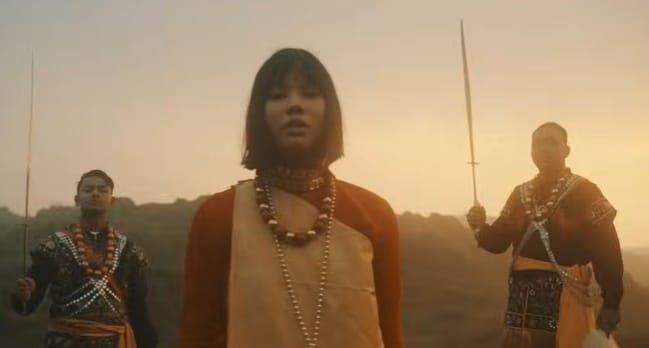
The Lokah theme song rap, by Reble’s own admission, was a result of her own inspiration with the film’s main character.
“The creative process was deeply connected to the main character’s story and the aspects I could relate to, understanding where she comes from and finding that resonance, because I think she speaks for a lot of people, especially women,” said Reble.
Growing up in a minority background, her early struggles became the driving force behind her music.
“As one of the few prominent female rappers from the Northeast, I want to inspire other women to step into the Indian rap scene,” said Reble, whose song sets the stage for the story of Lokah to unfold.
For Dhurandhar song, the rap is written by Reble, which interspersed with the classic lyrics written by Majrooh Sultanpuri’s Monica O’ My Darling.
Also read: Kala Academy was Goa’s cultural heart until Rs 75 cr govt renovation. ‘It is a tragedy’
Nationalism, self-determination
In 2022, K4Kekho had written and sang the theme song of Bhediya, a film set in Ziro in Arunachal Pradesh, and which looks at issues like environmental degradation, the insider-outsider debate and the racism residents face—when they move out of the state or when tourists visit their home turf.
Born in Chinghan in Tirap district—along India’s international border with Myanmar in Arunachal Pradesh — the rapper was struck by the violence and racism towards people from Northeast in other parts of India.
A year before his rap battle win, an Arunachali young man Nido Tania had been killed in a racist attack in Delhi.
K4Kekho’s rap single touched themes of racism and corruption in democracy.
“I keep my words simple to get my message across with ease. I write and rap in Hindi too, to reach a larger audience base,” said K4Kekho who mostly raps in Arunachali Hindi–the pidgin developed over the years as people from the state took to Hindi films and songs.
His song Go Vishanu Go from Bhediya was also in Arunachali Hindi.
“We cannot change our mother tongue or accent, and there is nothing to be ashamed of. But we are talking about Arunachal, which lacks a common language. It is about emotion and relatability. If a song requires authenticity, I prefer Arunachali Hindi,” said Kekho, who grew up on a steady diet of Bollywood, the rock band Michael Learns to Rock (MLTR) and the pop sensation Michael Jackson.
While his father encouraged his love for music, it was important for him that his son learned English.
“My father bought a book home for me to learn English, but that wasn’t helpful. I started listening to English songs instead. When my father bought me my first MP4 player in school, my first objective was to download all of Michael Jackson’s songs. That is how I slowly discovered Hip Hop.”
In 2025, he wrote Land of khushi marji to celebrate Arunachal Pradesh and its way of life.
“People have been using terms or phrases such as khushi khushi, or the land of khushi khushi. I wanted to amplify it and make a relatable satirical rap song,” he said with a laugh.
The first part of the song reflects the slow mundane life of the Arunachalees.
“I know people read about Arunachal Pradesh and tensions with China. I wanted to show that people here have other issues too,” said the 30-year-old. “But I am not opposed to even writing about China and Arunachal Pradesh tension too,” he added.
Also read: Indian video games finally bring mythology into storyline. Taking it to AAA level
The Northeast collaborations
Collaboration is crucial for rappers from the region, to push their voices and presence beyond the eight states, and also create tracks which showcase the vibrant, eclectic mix of talents and concerns.
In 2 Sons Of The East, Moko Koza and Yelhomie bring together the stories of their respective states. Shot in Shillong, the Manipuri rapper covers his head with a shawl of Ryndia silk, which is an indigenous product of Meghalaya. It also symbolises the unity and brotherhood among the artistes of the region.
Yelhomie also highlights the ethnic violence that happened in Manipur in 2023.
“A bomb just detonated in my yard, it ain’t even alarming,” he raps, singing about the grim situation in his home state but also defiant about his identity.
The two rappers had met for the first time in 2024, and became friends before eventually deciding to collaborate on a song together.
“When I travel to Arunachal Pradesh, I know I can reach out to Kekho, and in Manipur there is James (Yelhomie). It helps because we appreciate each other’s work and also look out for each other,” said Moko Koza.
In 2016, Anthem For The North saw crews and rap artists such as Khasi Bloodz, Symphonic Movement, Cryptographik Street Poets and B-boy Kim come together to speak about growing up in a country that pays little attention to the issues of the place from where you come.
These collaborations, and acknowledgement of each other’s work have often even helped rappers book gigs across states.
The rise of music festivals in the Northeast has also given the support to the independent rappers. From the Ziro Music Festival and Orange Festival of Adventure and Music in Arunachal Pradesh, to Leitlangpui Music Festival in Mizoram, Hornbill Music Festival in Nagaland and Cherry Blossom in Meghalaya.
It was the Hornbill festival that inspired AR Rahman to produce the documentary Headhunting to Beatboxing: A Musical Renaissance. Rahman is also set to open his studio in Nagaland, to create space for musical talent in the state.
But there is a long way to go.
“I think we need more labels coming here, more local festivals with homegrown lineups and more support and love for one another,” said Reble.
(Edited by Anurag Chaubey)