





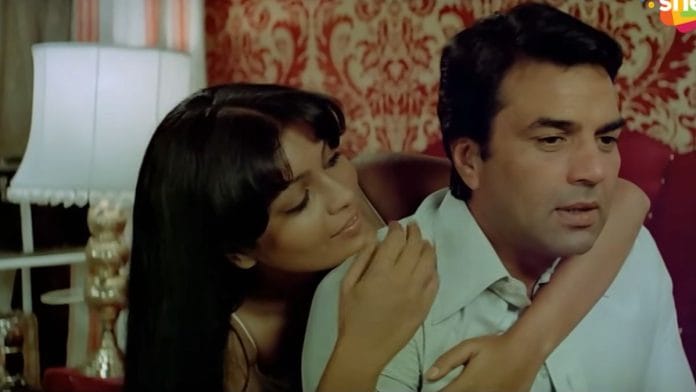



In Shah Rukh Khan’s 2014 film Happy New Year, the diamond heist centres on a high-tech safe called Shalimar—a nod to the 1978 film starring Dharmendra and Zeenat Aman. Happy New Year earned over Rs 300 crore worldwide, but the film it referenced met a different fate.
Shalimar was released as the most expensive Indian film of its time, with a reported budget of around $4 million (over Rs 3 crore) and an international cast that included Hollywood actors Rex Harrison and John Saxon. It was an Indian-American bilingual production, shot in both English and Hindi, and was Dharmendra’s Hollywood debut. Internationally, it was released as Raiders of the Sacred Stone.
The film had scale, ambition, and star power. It still bombed at the box office, undone by a weak screenplay and uneven execution that not even RD Burman’s music could rescue.
Dharmendra plays SS Kumar, a pickpocket and gambler. He finds his way to a remote island retreat organised by an Englishman named Sir John, who is suffering from terminal illness. John decides that his prized ruby should go to a “worthy“ successor, and devises a deadly contest to find one.
Kumar is summoned to John’s fortified private island, along with some of the world’s most skilled thieves (played by OP Ralhan, John Saxon, and Sylvia Miles).
The challenge is simple: steal the ruby. The gem is protected by traps and spear-wielding tribals and is under constant surveillance. If they fail, they die.
There is also Sheila Enders (played by Zeenat), who plays Kumar’s former love and John’s nurse.
An uneven production
In his book, The Shalimar Adventure (1979), veteran publicist Bunny Reuben talks about how the movie was made and unmade. Director Krishna Shah’s original story, as per Reuben, was titled Johannesburg Jigsaw and was set in Jamaica.
The film’s ambition was evident. There were exotic locations, elaborate set pieces, a multicultural cast, and an attempt at a genre that Bollywood had rarely explored. But it was all in vain.
Despite the big budget, the production quality remains uneven. While some scenes display genuine effort and scale, particularly the sequences set on John’s guarded island, many technical aspects, such as editing, dubbing, and pacing, lack cohesion.
The movie feels disjointed rather than polished.
The 1970s pushed the Hindi film hero’s screen image into grey zones and dark shadows. Dharmendra as Kumar, the thief-hero, also fits that mould. The problem is that neither Dharmendra nor Zeenat’s character evolves in the film.
Also read: Manchali is Bollywood’s masala take on Shakespeare—a husband for hire and his bratty bride
Music in Shalimar
If Shalimar has endured at all, it is largely due to Burman’s soundtrack.
One song in particular, ‘Hum Bewafaa Hargiz Na They’, carries a strong sense of nostalgia and remains memorable even for viewers who didn’t like the film back then.
However, within the narrative, the song feels forced and poorly integrated. It ends up becoming a missed opportunity.
A major problem with Shalimar is its use of a vaguely defined ‘tribal’ theme, most prominently expressed through ‘Hum Bewafaa Hargiz Na They’. The film treated tribal culture as an exotic spectacle, using drums, chants, and costumes to create an atmosphere of mystery and danger.
But, in the end, the theme feels superficial instead of being meaningful.
Also read: Tiger terror, tangled tales—Shashi Kapoor’s Jaanwar Aur Insaan was a cocktail gone wrong
Ahead of its time?
On IMDb today, Shalimar holds a 6.3/10 rating, reflecting the divided views of modern viewers. Some appreciate its nostalgic cult appeal, while others find it campy and incoherent.
Many call Shalimar ‘ahead of its time’ and a bold experiment that Indian audiences in 1978 weren’t ready for. It’s a film trapped between the conventional melodrama of Bollywood and the sleekness of Western spy capers.
The film is by no means a masterpiece. And it isn’t among Dharmendra’s greatest works either.
But for fans of cult movies and anyone curious about the evolution of Indian commercial cinema, Shalimar is an unforgettable, if imperfect, cinematic experience.
(Edited by Prasanna Bachchhav)