









New Delhi: As blue and gold lights pulsed, hands went up in the air, sporting concert bands and glowing phones. Young men and women whirled and twirled in black jackets, high boots, ripped denims. Twenty-year-old Parth Goella jumped wildly to drums and synth, singing along not to Laal Pari or Bijuria but to Radha Meri Chanda Chakor Hai Bihari.
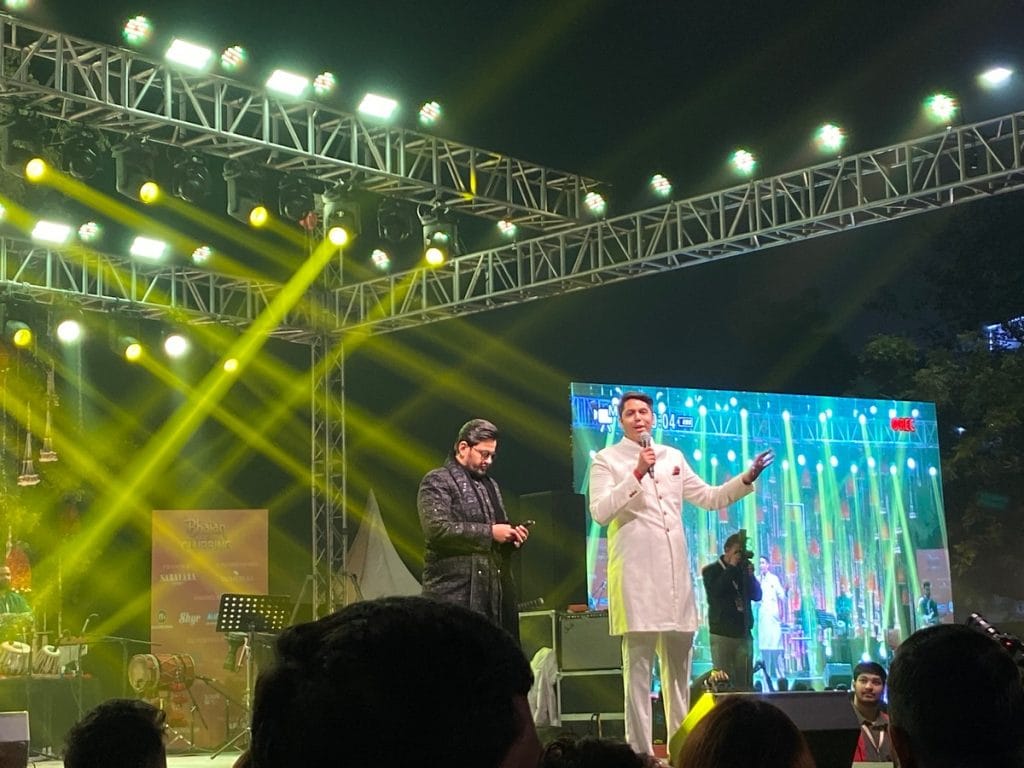
On the cold night of December 21, Indira Gandhi Sports Complex became a three-hour ‘rave’ minus the Bollywood or EDM. Singers belted out high-voltage bhajans for Ganesh, Shiva, Ram, and Krishna. It was ‘Delhi’s biggest bhajan clubbing event’—a multigenerational satsang 2.0, where the energy of a nightclub came with parental blessings.
“Bhajan clubbing is all about moving from ‘DJ please’ to ‘Jai Shree Ram’ and ‘Hare Krishna’,” said Goella, taking selfies with his proud mother at the event organised by Sanatana Journey, a platform that packages Sanatana Dharma for a new generation.
Bhajan clubbing, bhajan jamming, bhajan concerts are taking off as the new weekend must-do for urban Gen-Z. They are young, religious, and want to have good clean fun, just not the way their parents did. The Kumbh is a youth hotspot, Mathura-Vrindavan Reels are their own Instagram genre, and astrology doubles up as self-help. The religious and spiritual market touched $65 billion (about Rs 5.6 lakh crore) in 2024 and is projected to grow at 7.6 per cent through 2033. And now bhajan clubbing is finding its groove.
A whole circuit is springing up around it, from Sanatana Journey to jam band duo Backstage Siblings, who are launching a multi-city tour in January. Groups like Sumiran Satsang, Krishna Sansar, and individual performers such as India’s Got Talent runner-up Suresh Prajapat are organising bhajan sessions.

These devotional-dance events are no longer limited to Mumbai, Delhi, and Kolkata weekend nights, but also being hosted in Chandigarh, Surat, Vrindavan, Jaipur, and Indore. “Kaise hogi clubbing or party? When peace sounds like this,” read a caption on a viral video showing young people clapping, chanting, and waving mobile lights during a bhajan night.
The trend gained early momentum after a video by Backstage Siblings Prachi and Raghav Agarwal went viral, showing young people joyfully swaying, clapping, and singing bhajans together. And now smaller gatherings are evolving into large-scale ticketed galas, like the concert in Indira Gandhi Sports Complex, which saw a crowd running into thousands. Each ticket went for Rs 899.
“Bhajan clubbing is not a rejection of tradition; it is an evolution of it. It’s a new and accessible way of connecting with spirituality in a Gen Z style,” said 25-year-old Nikunj Gupta, founder of Sanatana Journey, which also offers verified Vedic pandits, online pujas, and cultural experiences.
Also Read: Young India’s cultural assertion isn’t conservatism—it’s course correction
‘A competition to Sufi nights’
As soon as 21-year-old Aanya Gupta and her two friends, all with their mothers in tow, entered the stadium, they headed straight to the face-painting stall. Tilak first, then glitter. With a dab on the forehead and sparkle on the cheek, the night could begin.
From 5 pm to 8 pm, two performers and a band carried a rapturous crowd of around 5,000 people along on waves of “Ram Ram Jai Sita Ram” and “Shankar Shankar”. Some songs coaxed them into gentle swaying and closed eyes. Others demanded jumping, clapping, and full-throated choruses.

But the event went beyond bhajan, devotion, and dance. There were stalls for food, soft toys of Krishna and Shiva, stoles, prasad, and hampers from Vrindavan and Mathura.
Aanya has always found it difficult to sit still in temples with a priest droning. However, a buzzing crowd chanting “Ram Ram” or “Jai Shri Krishna” stirs something joyful in her.
“There is no pressure,” she said, exploring the food counters with vegetarian delicacies such as golgappa, aloo tikki, chole bhature, and pav bhaji. “You just feel happy chanting, dancing, and enjoying yourself with everyone.”

It’s part of a wider mission for Sanatana Journey.
“We are making Sanatan Dharma, and its stories, traditions, and values easier to understand through a modern lens so that the new generation and future generations don’t run from it, but enjoy and learn more about it,” said Gupta, who studied acting at the Arts University Bournemouth.
For him, bhajan nights are a direct retort to Sufi nights.
“If Sufi nights are associated with a specific religion or culture, then why can’t there be Bhajan nights dedicated to Sanatan Dharma and its followers?” he asked. “Bhajan Clubbing will stand as a response and friendly competition to Sufi nights.”

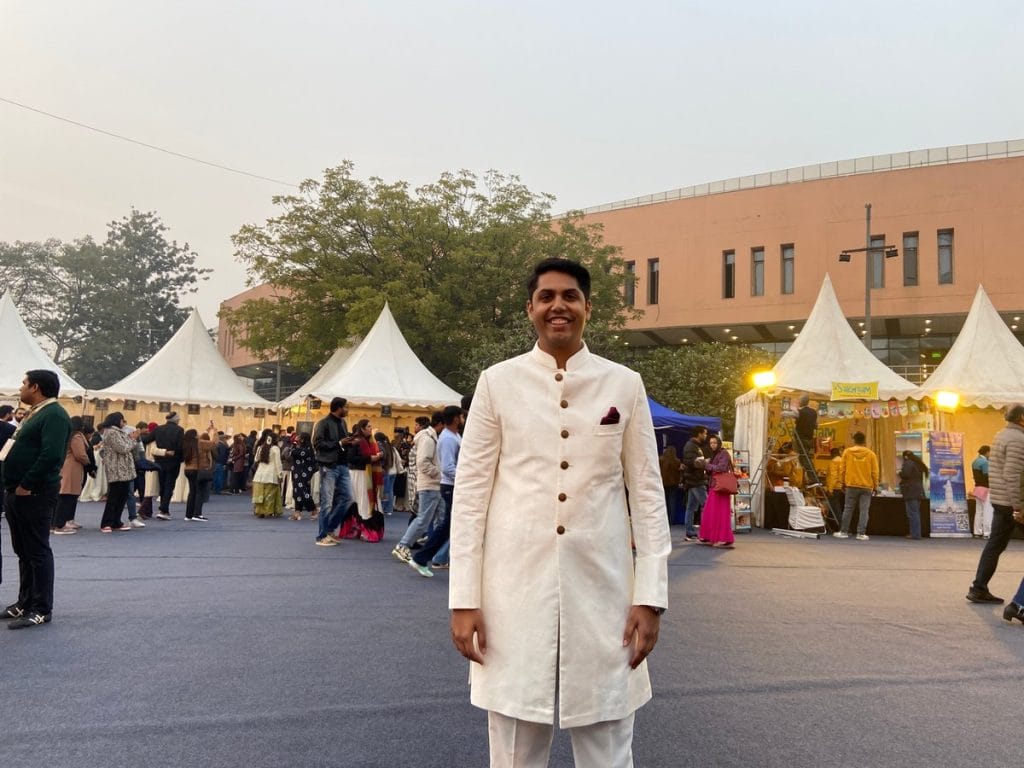
Dressed in a white sherwani, he turned back to the band, raising his hands and repeating after them: “Shiv Kailasho ke waasi, Dhaulidharo ke raja, Shankar sankat harna.”
The fusion of loud music, bands, and bhajans started as intimate musical gatherings among friends and Gen Z groups. Singing bhajans with basic instruments like the flute and dholak has always been part of kirtans and jagratas. What’s different now is the addition of beats and a wider spread of instruments, bringing a modern musical energy to these nights and events.
“It’s like a festival with everything. Bhagwaan aur hum dono khush (God is happy and so are we),” Goella said, just as another flower shower began. Like many others here, his mother had convinced him to attend the event.

Also Read: Moon madness has taken over modern dating. A waning crescent is the best time to ghost
Joyful for some, ‘performative’ for others
About 20 days earlier, 62-year-old Rasna Nanda came across an Instagram post advertising “Delhi’s biggest bhajan clubbing events”. She immediately booked tickets for herself and two of her friends.
“Bhajan clubbing is spirituality without complexes, where you can connect to God in the most joyful way,” said Nanda after completing a full 360-degree spin to the bhajan ‘Shyama Aan Baso Vrindavan Mein, Meri Umar Beet Gayi Gokul Mein’.
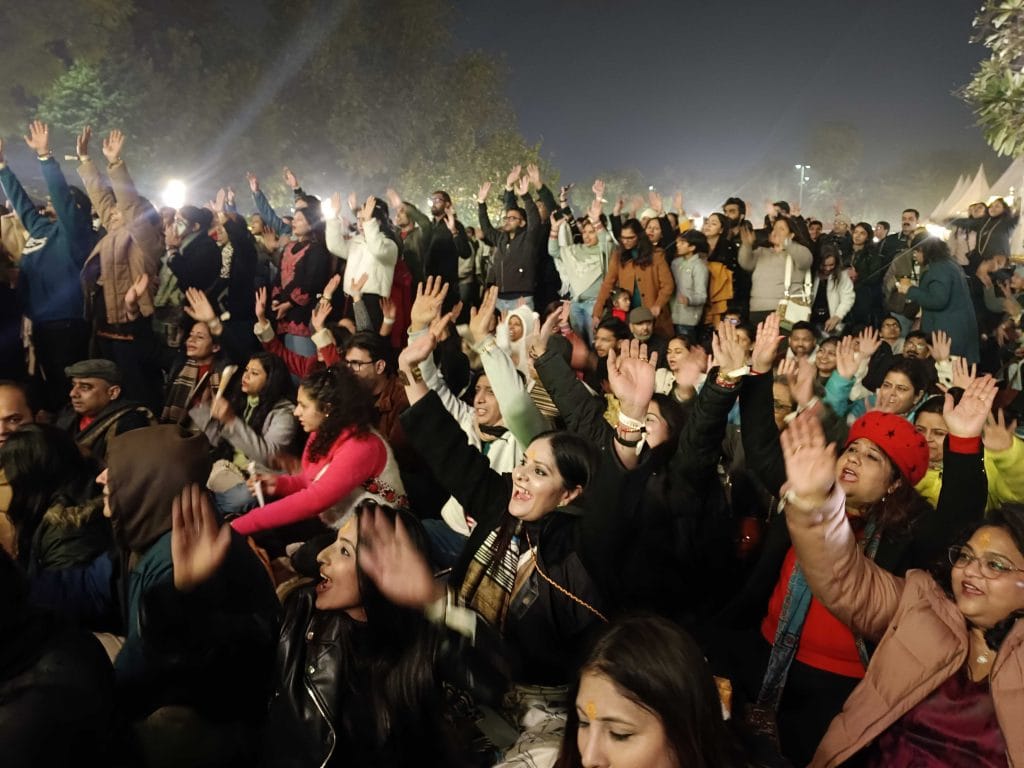
Dressed in saris, tilaks on their foreheads, and bottles of gangajal bought from a stall in hand, Nanda and her friends took a break to sit and sing along with the gentler-paced Shree Ram Janki Bethe Hai Mere Seene Mein.
Nanda said it beat the jagratas she had attended, where people sit through the night following strict protocols. It also beat clubs, where the drinking and smoking make her uncomfortable. For her, it’s a sanskari yet modern bridge between generations.
“It’s impossible to convince the new generation to participate in any jagrata or kirtan. But this concept gives both generations a platform to dance and to experience devotion,” she said.
This melding of praying and partying sits uneasily with some observers.
“Religion has now become performative, and this is one example. Clubbing and bhajan are two contradictory concepts, which may not coexist for long,” said social commentator and brand consultant Santosh Desai. He compared it to the Kumbh Mela’s fair-like pull, where many people attend for enjoyment rather than devotion.
More than spirituality, it’s about showcasing group identity, according to Desai.
“It’s a trend of the new generation to show the outside world their religion or how connected they are to it,” he added.
Meanwhile, Generation Alpha is already joining the dance. Six-year-old Naina Sharma does mudras with her hands to match the lyrics of Barsane ki Chori Radha Gori Gori, with her parents Jai Kishan and Nandini Sharma beaming fondly at her.
“It’s the best possible way to introduce our children to our religion and Sanatan Dharma,” said her 34-year-old father. “Here, religion is no longer a burden for them, it’s joyful and free.”
(Edited by Asavari Singh)