








New Delhi: India’s royal food and culture have always been a source of fascination for the world. Recently, Neha Vermani, a historian specialising in Mughal South Asia, shared a glimpse into nearly 130-year-old culinary history.
She shared a royal dinner menu from 31 January 1897 hosted by Sayajirao Gaekwad III, the Maharaja of Baroda State from 1875 to 1939. It was held in honour of Maharaja Sir Madhorao Scindia I of Gwalior, who ruled between 1876 and 1925.
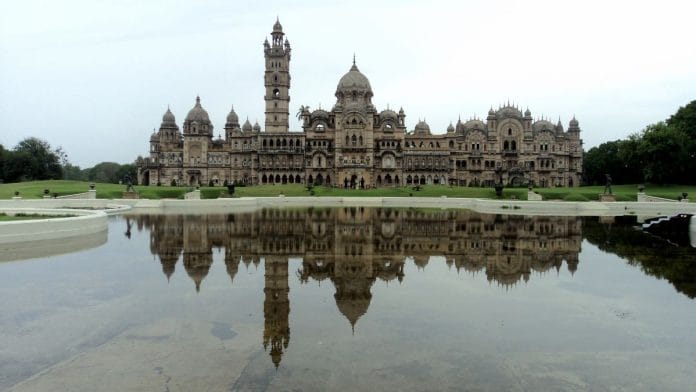
The dinner was held at the Laxmi Vilas Palace in Gujarat during the colonial era.
“Not what you’d expect a 19th-century dinner hosted by the Maharaja of Baroda for the Maharaja of Gwalior to look or taste like, featuring truffles, artichokes, and way too many fancy French names & stuff,” wrote Vermani in her X post.
French, Italian & Indian fusion
Rather than Indian dishes, the menu features items that would today be described as fusion food. It reads like a lesson in French haute cuisine.
Embossed with the king’s profile, the now-yellowing menu shows the dinner time as 7:30 pm. It begins with Potage d’Amandes, an almond custard or flan, followed by Poisson Braise sauce Mayonnaise, a braised fish dish served with a rich mayonnaise sauce.
The final starter is Crème de Volaille aux truffes, a luxurious chicken cream soup infused with truffles.
The main course featured Côtelettes de mouton à l’Italienne, Italian-style lamb cutlets, and Selle de perdreau rôtie aux petits pois, a roast made from a specific cut of partridge served with fresh peas.
The side dishes included Fonds d’artichauts à la demi-glace, artichoke bottoms simmered in a French brown sauce, along with Curry de macedoine de legumes et riz, a vegetable and rice curry.
For dessert, there were apples cooked or baked with cream and pistachio ice cream.
Also read: A tiffin, a lie & an ageing marriage—Thursday Special builds conflict around food
The Gaekwad palace cuisine
The menu reflects what the Maharaja of Baroda was known for–a great gourmet and entertainer. The connoisseur of arts, he commissioned the legendary artist Raja Ravi Varma to paint a series of mythological paintings for the newly-constructed Laxmi Vilas Palace in 1888.
But his love for food was no less.
“It is true that Gaekwadi cuisine is unique, you will not find it anywhere in India. In fact, not even outside the Laxmi Vilas Palace! I believe it is the earliest version of fusion cooking in the country,” wrote his granddaughter Maharani Shubhanginiraje Gaekwad.
The king championed Gaekwadi cuisine—a fusion created by marriages between the Gaekwad family and princesses from Gwalior, Tanjore, and Kolhapur gharanas, as well as other princely states. These princesses, along with palace chefs with different cooking styles, changed the original Maratha cuisine of the Baroda palace to suit their tastes.
At one time, game was also an integral part of palace dining. Wild boar, partridge, peacock, duck were all cooked, and the Laxmi Vilas Palace cooks still have recipes for these dishes.
“Our lunch in the palace is Indian, and dinner is always continental. Indian food, especially Gaekwadi cuisine, is too rich to have twice a day. Besides, we are fond of Continental food. Our cooks make Continental meals that are comparable to the best in classic French restaurants. You should taste the tartare sauce they make. It is unique. It goes so well with a roast saddle of lamb. When we are dining abroad, we often wish we had carried our own tartare sauce with us,” wrote Maharani Shubhanginiraje.
(Edited by Ratan Priya)