








VMPL
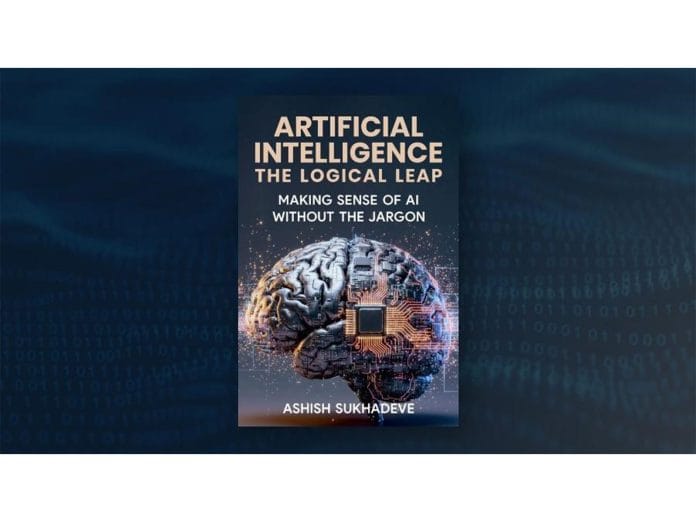
New Delhi [India], January 23: Artificial intelligence no longer arrives with spectacle. It unlocks phones, filters job applications, flags medical risks, and shapes how children learn. Yet for most people, AI still feels distant, opaque, and vaguely threatening. This gap between usage and understanding sits at the centre of Artificial Intelligence: The Logical Leap, a book that treats AI not as myth or miracle, but as a system that already influences everyday decisions.
From the opening pages, the book confronts a clear contradiction. AI has moved into daily life, but public understanding has not kept pace. Instead of promising disruption or warning of collapse, the book sets a measured tone. It asks readers to understand what AI is, how it works, and where its limits begin.
A Grounded Voice Behind the Argument
The book comes from Ashish Sukhadeve, Founder and CEO of Analytics Insight. Years of tracking AI, data, and emerging technologies shape the book’s perspective. This background shows in its restraint. The writing avoids hype. Furthermore, it does not simplify the matter too much.
The concept developed from a recurring trend Ashish has noticed over the years: headlines asserting AI’s role taking over, with their actual impact still very unclear. Instead of hopefulness or panic, this book intends to turn the gap into conversation through transparency and context.
Clarity Without Comforting Illusion
The early chapters focus on fundamentals. Artificial intelligence appears here as a collection of methods, not an independent force. The book explains how machines detect patterns, respond to feedback, and improve performance through iteration.
In a chapter titled The Logical Leap, the author confronts common misconceptions head-on. AI has no awareness. It has no intent. It does not think or reason like humans. Its outputs reflect training data and design constraints. By clearly stating these boundaries, the book strips away exaggerated fear and misplaced trust. Readers come away with a realistic mental model, not a comforting fantasy.
From Concepts to Consequences
Once the foundations are set, the book moves into applications. Healthcare, agriculture, manufacturing, finance, education, energy, and retail each receive focused attention. The discussion stays rooted in process. The book examines how decisions change, where efficiency improves, and where risks multiply.
Education is a prolonged process that is still being studied. The author discusses personalised learning, automated assessment, AI tutors, and accessibility tools as the main topics of the book.
While on the one hand, the book points out the problems of bias, over-dependence, and unequal access, on the other hand, it informs the audience through analysis of the following motions. It neither glorifies the role of automation nor downplays the drawbacks of its absence.
Understanding Limits, Not Just Capabilities
One of the book’s strengths lies in its ability to explain complexity without technical barriers. The writing avoids code and mathematics. Instead, it uses everyday analogies to explain neural networks, deep learning, computer vision, natural language processing, and reinforcement learning.
Failure receives as much attention as success. Readers learn why data quality determines outcomes, how bias enters early, and where systems break down. The book is full of warnings about blind automation and wrongly placed trust.
Naturally, ethics becomes a concern. Bias, surveillance, deepfakes, privacy, and AI safety are considered developing issues rather than minor concerns. On the subject of the future of work, the argument continues to be quite realistic. Jobs will change, but must human judgment, creativity, and accountability always be there.
Who Should Read This Book
Artificial Intelligence: The Logical Leap is for professionals, educators, policy makers, students, and inquisitive readers who want a deep understanding without technical difficulties. It asks for no coding knowledge, only attention and curiosity.
Its real achievement lies in respect for the reader. The book assumes intelligence, not expertise. In an era shaped by rapid technological change, the book does not ask readers to predict the future. It asks them to engage with it thoughtfully. This makes The Logical Leap not just relevant, but necessary.
The book is available on Amazon, Flipkart and Notion Press.
(ADVERTORIAL DISCLAIMER: The above press release has been provided by VMPL. ANI will not be responsible in any way for the content of the same.)
This story is auto-generated from a syndicated feed. ThePrint holds no responsibility for its content.