





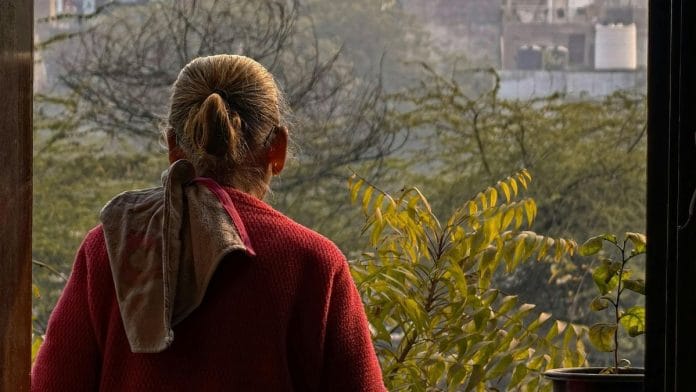


On the eve of India’s independence, frantic faces were lined up in a dimly lit room on Abdul Khair Street in Quetta, Balochistan, listening to the radio with bated breath. Fifteen-year-old Rama, holding her six-day-old sister in her arms, was observing the elders anxiously. Were they really going to pack up overnight and leave this all behind, without knowing where to go and how to get there? Would there be riots? Were they going home or leaving home? Neighbours, one by one, rushed back to their homes to plan their exit. Some, who were optimists, like Rama’s father, said there would be no riots in their town and life would go on as usual.
He had just returned from the department store he owned in the centre of the town, after having tea with his Pathan friends that afternoon. There had been whispers about a partition, but he did not think it would really happen. News still travelled at a leisurely pace then. Regardless, some people had started migrating since July. In Bengal, Kashmir, and Punjab, representing the fault lines of Partition, episodes of communal violence had been erupting since June. People sitting in that quiet colony in Quetta knew that the ‘batwara’ was based on a religious divide and that the British were on the verge of departing from India.
Meeting Ramaji
When we spoke, ninety-three-year-old Rama Butani lived in Delhi, in a three-storeyed bungalow, with her son, daughter-in-law, and grandchildren. Her home was located in a colony in West Delhi. Initially, I had spoken to her daughter-in-law, Anjali Butani, who had checked in with her regarding the interview. Ramaji, one of the few surviving children of Partition, said this was her first interview about crossing the border as a fifteen-year-old in 1947. Her daughter-in-law was setting up a camera when I entered the interview room. Ramaji’s grandchildren had requested their mother to record Dadi’s interview.
Ramaji walked into the room, smiling. Though age had slightly bowed her diminutive body, she was swift in her movements. She was wearing a light green suit and her long white hair was tied back in a thin braid. She sat cross-legged on the bed, resting her back against the bedpost. Anjali joined us.
Ramaji’s grey eyes lit up when she talked. She did not second-guess any emotion, any event, any claim. She laughed out loud at even the hint of a joke. Her sense of humour was dark one moment, simple and endearing the next.
As a child, Rama lived with her father, mother, elder brother, paternal grandmother, paternal uncle and aunt, and infant sister in Quetta. Her recollections of her childhood, events that happened almost eighty years ago, were sharp and precise and brimming with nostalgia. Time and again she spoke about being free, cycling, and climbing to the roof with friends. Balochistan was prone to earthquakes, so most houses were single-storeyed, with terraces made of steel sheets. She described with startling clarity the intricate carpets from Iran, the heirlooms, the trunks full of ration, the perfume bottles, the utensils, and other details of the things that comprised the home she had left behind. She spoke about the currency, architecture, food production, utensils, and the general simplicity of that time, all with a sparkle in her eyes.
It was a heartfelt conversation between three women, from three generations, connecting and re-living the past.
Also read: Freud said many great men in history were gay. I read it as a gay man in 1960s Bombay
The Partition—Civic unrest to anarchy
Rama’s family took on an arduous journey of about two months from Pakistan to India between August and October 1947. Their displacement across the border mirrors the journeys of 1.2 to 1.4 crore people who migrated between India and Pakistan, the largest human migration in recorded history. This, in the backdrop of immense brutality, mass slaughter, and communal violence. The contemporary statistics of killings vary from 2 lakhs (British estimate) to 30 lakhs (Indian estimate). Around 75,000 women were mutilated, raped, or abducted.
For Rama, the violence did not arrive gradually. It began abruptly on 14 August 1947, when Pakistan got independence. ‘Pathans entered our homes,’ she recalled. ‘Unhone maarna kaatna shuru kar diya (They began killing and mutilating people).’ She was clear that the men in the mob were not people they knew.
She reflected, ‘There were several Pathans, our neighbours and friends, who gave shelter to their Hindu friends to save them from the mob.’ But several Muslims who had given shelter to Hindus were also killed by the same mob. In India as well, Hindus were violently pushing Muslims out of their homes. The same merciless killings. Empty houses were being looted and set on fire on both sides of the border.
One cannot deny that communal biases, stereotyping, and discrimination are part of human nature. But something far bigger is at play when these tendencies escalate into unorganized violence. They emerge from something darker and more volatile in human beings. At the core, collective tragedies do not emerge from religion or identity alone. Individuals in groups can behave in ways they wouldn’t alone.
The group weakens personal restraint and heightens hostile and sexual aggression. For instance, when I feel afraid of a group of men in a dark alley, it is because men in groups represent a magnified threat, a fear shaped by growing up in Delhi. Women specifically know this feeling in their bones. A mob develops a brain of its own. There the powerful prey on the weak, the majority prey on the minority.
Freud explained the origin of anarchy—the complete lack of order that we see in communal riots—in his book, Civilization and its Discontents. He described an inherent tension between individual instincts that demand freedom and requirements of civilization that demand control. Individual instincts are grounded in human beings’ sexual and aggressive impulses whereas a civilization needs rules and cooperation. We live inside this inherent contradiction daily. We need control but don’t necessarily want it. We may want to drive fast, but we need traffic rules. When tragedy strikes, one may want revenge but one needs a legal system. Organized civilization survives on repressing unorganized impulses.
Freud believed that when social order collapses, this long-held tension erupts into brutality. The Partition is a devastating example of such anarchy. During riots and protests, common people start engaging in looting, arson, vandalism, and killing. People find within themselves a cruelty they could hardly have imagined themselves capable of.
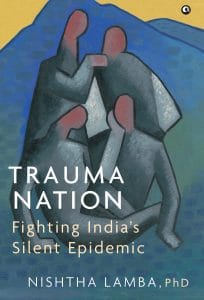
This excerpt from ‘Trauma Nation’ by Nishtha Lamba has been published with permission from Aleph Book Company.