








Mumbai: Tushar Dhadam, who runs a small restaurant in one of Mumbai’s commercial hubs, was forced to raise the price of a vegetarian thali, a popular lunch dish on his menu, by 10% in the past week.
He paid a premium to buy a commercial cooking gas cylinder on the black market last week, as supply disruptions in the Middle East, where India sources most of its gas, created acute shortages in the formal market.
Dhadam said he paid more than 2,000 rupees ($21.729) for a cylinder, against the usual price of 1,750 rupees. “I am ready to pay 3,000-3,500 rupees for the next, but there’s none available,” he added. He said he now faces the real possibility of shuttering his business temporarily when the cylinder runs out.
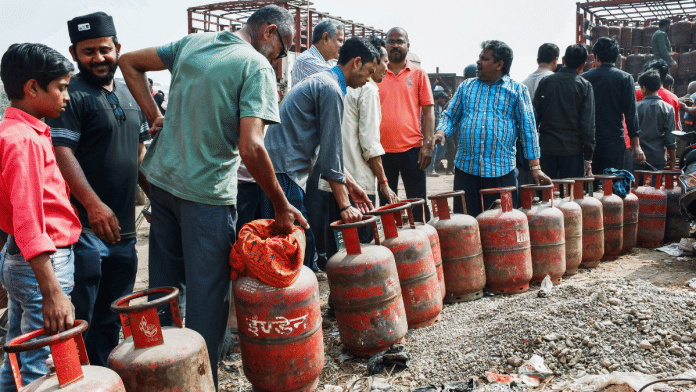
The squeeze is even more acute for nearby roadside stalls selling Indian breads, eggs and tea, many of which operate on daily profits of just a few hundred rupees. Unable to afford scarce blue-tinted commercial cylinders, some are illicitly using subsidized domestic cylinders, which come in brick-red color, hidden inside gunny bags. Many have held off on raising prices for fear of losing customers.
The gas crunch is rippling through the economy, raising fears about a spike in prices and a drop in output in some sectors. Data on Thursday will likely show a pick up in inflation even before the latest surge in global energy costs, a worrying outcome for policymakers.
Economists surveyed by Bloomberg predict inflation accelerated to 3.14% in February from 2.75% in the previous month. While still within the central bank’s 2%-6% target band, economists are bracing for volatile fuel and cooking gas costs to filter through in the coming months, particularly if supply disruptions persist.
“The impact of elevated and volatile crude and gas prices will be reflected in the March CPI inflation numbers, underscoring their role as the single most important variable for India’s price stability,” said Rajeev Sharan, Head of Research at Brickwork Ratings.
The crisis in the Middle East shows no signs of easing. Fuel shipments through the Strait of Hormuz, a vital chokepoint, are all but halted, prompting the government to roll out emergency measures to protect the more than 300 million households that depend on the fuel.
Price Hike
India raised prices for its most widely used cooking gas for the first time in almost a year on Saturday, increasing rates by 7% to 913 rupees ($9.9) for 14.2 kilograms cylinder used by most middle-class households, according to its website. Poor households, that continue to get a subsidy of 300 rupees per cylinder, faced a steeper 11% increase. Rates for commercial consumers such as restaurants and hotels, typically revised at the start of each month, were raised for a second time in March on Saturday. However, supplies to commercial users have been halted.
Retail fuel prices in the pump has remained unchanged for now as oil marketing companies are absorbing the losses.
India revised its consumer price index last month, clubbing fuel light and gas with housing for a combined weight of 17.7% from 16.9% earlier. That means inflation data will take a bigger hit from the spike in global energy costs if those hikes are passed on to retail prices.
So far, the government is trying to curb the fallout for consumers. Sujata Sharma, an oil ministry official, told reporters Wednesday that the government absorbed a significant share of the increase in liquefied petroleum gas, and that market prices would have been much higher without its intervention.
What Bloomberg Economics Says
“India’s economy may be sliding toward stagflation. That would mark a sharp turn from the Goldilocks conditions — mild inflation, healthy growth — before the Iran war broke out and sent oil and gas prices swinging.”
Abhishek Gupta, Senior India Economist
For the full note, click here
Inflation has remained well below the central bank’s 4% target in the past year, dropping close to zero at one point as food prices plunged. However, prices have started to climb now, and with a hotter than usual temperatures forecast for the summer, food prices are expected to rise even further.
Everyday price spikes can quickly become a political headache for Prime Minister Narendra Modi’s government, as Indian voters have shown acute sensitivity to rising household costs. In 2023, soaring onion and tomato prices triggered intense criticism and scrutiny, prompting swift government intervention to contain the fallout.
The gas crunch is adding to a gloomy picture for inflation. Restaurants in parts of the country have halted operations or curbed operation. One of Mumbai’s iconic eateries, Pancham Puriwala, reduced its menu by 80%, while a few popular Hyderabad biryani joints reportedly switched to cooking with wood. In a video posted on X, people were seen rushing to exchange their empty cylinders for a filled one in Uttar Pradesh.
Sharma, the oil ministry official, said the panic and hoarding in the market has been triggered by misinformation.
The Mumbai vendors, however, remain unconvinced. A tea seller in Lower Parel, down to his last commercial cylinder, said he will keep the price of a cup of chai at 10 rupees for now. After that, he will simply shut his shop, he said, since his supplier told him the cylinders won’t be available, even at a cost of 5,000 rupees.
Disclaimer: This report is auto generated from the Bloomberg news service. ThePrint holds no responsibility for its content.